

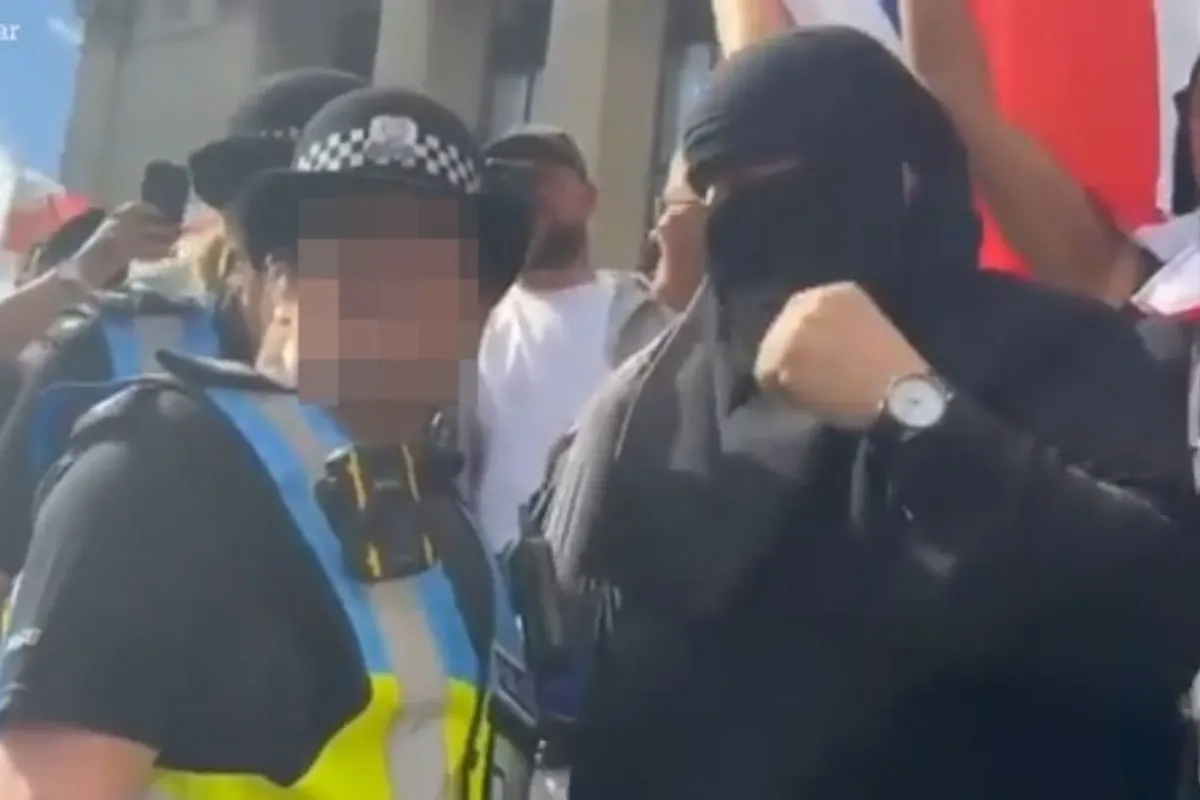
A 76-year-old man was arrested in Portsmouth during a protest involving anti-migrant demonstrators and counter-protesters. Hampshire Police stated that the arrest was made because the individual was concealing his identity, a move that had been explicitly warned against by authorities prior to the event. The protest, which drew a significant crowd to the city, saw police intervention as tensions rose between opposing groups.
Context of the Demonstration
The demonstration in Portsmouth was organized by anti-migrant groups, attracting a substantial number of participants to the city center. Simultaneously, counter-protesters, including members of the Stand Up to Racism campaign, were also present, leading to a polarized atmosphere. Police had established a strong presence to manage the situation and maintain public order.
Police Warning and Enforcement
Ahead of the protest, Hampshire Police issued a clear warning regarding the concealment of identity. Officers stated that any individual found to be covering their face, particularly in a manner that obscured their identity, would be subject to arrest. This directive was part of broader measures to ensure accountability and safety during the potentially volatile gathering. The arrest of the 76-year-old man occurred under these specific circumstances, with authorities confirming the individual was apprehended for breaching the conditions related to identity concealment.
Escalation and Police Response
Reports indicate that the situation escalated as the two groups, the anti-migrant demonstrators and the counter-protesters, came into close proximity. Police forces were deployed to create a buffer zone and de-escalate any potential confrontations. The presence of officers was crucial in preventing direct clashes between the opposing factions. The arrest was one of several police actions taken throughout the day to manage the crowd and enforce regulations.
Broader Implications of Anti-Migrant Protests
Anti-migrant protests have become a recurring feature in various parts of the United Kingdom, reflecting ongoing societal debates surrounding immigration and national identity. These demonstrations often attract significant attention, both from supporters and opponents, leading to complex policing challenges. The events in Portsmouth highlight the difficulties authorities face in balancing the right to peaceful assembly with the need to maintain public safety and prevent disorder.
The Role of Counter-Protests
Counter-protests, such as the one organized by Stand Up to Racism, often emerge in response to anti-migrant demonstrations. These groups aim to challenge the messages and ideologies put forth by anti-migrant activists, advocating for more inclusive and tolerant approaches to migration. The interaction between these opposing groups can amplify tensions and necessitate a robust police presence to ensure that demonstrations remain peaceful.
Legal Frameworks and Public Order
The police’s ability to enforce conditions, such as the ban on face coverings during protests, is typically governed by public order legislation. These laws are designed to give authorities the power to impose conditions on public gatherings when there is a risk of serious disorder, disruption, or criminal damage. The aim is to facilitate lawful protest while mitigating potential harms. In this instance, the police invoked powers to prevent the anonymity that face coverings can provide, potentially to identify individuals involved in any unlawful activity.
Conclusion
The arrest in Portsmouth underscores the complex dynamics surrounding public demonstrations, particularly those with contentious social and political themes. While individuals have the right to express their views, this right is balanced against the need for public safety and adherence to legal restrictions. The police’s actions were a direct response to pre-declared conditions aimed at managing the protest and ensuring order amidst a significant public gathering.
