

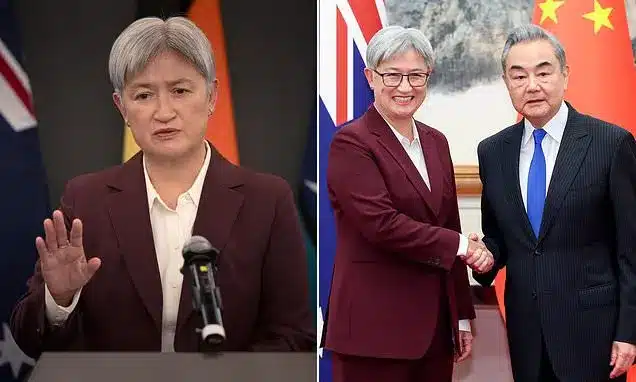
Australia has reached a key agreement with China for jet fuel supplies, easing concerns over dwindling reserves for airlines. Foreign Minister Penny Wong confirmed the negotiations during her meeting with Chinese counterpart Wang Yi in Beijing.
Breakthrough in High-Level Talks
Following discussions between Prime Minister Anthony Albanese and Chinese Premier Li Qiang earlier this month, the Chinese government is now facilitating direct talks between Australian businesses and state-owned oil firms. Wong highlighted this progress, stating, “Following the Prime Minister’s discussions with Premier Li, I can confirm that the Chinese Government is facilitating engagement with Australian businesses on jet fuel.”
She expressed gratitude to Wang Yi for the cooperation during their evening meeting.
Fuel Shortage Driven by Global Disruptions
The deal addresses a severe fuel crunch triggered by China’s halt on oil exports from refineries in March, compounded by the Middle East conflict and the closure of the Strait of Hormuz. This vital waterway handles 20% of global oil flows, including 80% bound for Australia and the region.
China provides about 30% of Australia’s jet fuel needs. Airlines have alerted authorities that current assurances could expire by late May due to widespread export restrictions.
Wong described the situation as “an unprecedented shock to global energy markets,” adding, “It is more important than ever for countries of our region to work together, to coordinate our responses and to keep fuel and goods flowing.”
Business-to-Business Negotiations Underway
State-owned giant Sinopec is leading the coordination for business-to-business deals, rather than government-led purchases. Officials interpret this as endorsement from China’s top leadership.
Beijing recently greenlit 500,000 metric tonnes of fuel exports for May—nearly double April’s volume to non-Hong Kong destinations—though still below pre-crisis levels.
Wong framed the shortage as a mutual challenge, noting, “The inputs China supplies to Australia, including jet fuel, support the Australian resources sector, which in turn helps to maintain the flow of commodities that are so important in the bilateral trading relationship.” She emphasized, “There is a clear mutual benefit in keeping those supply chains running.”
Both nations share vulnerabilities, with Wong stating, “What this has shown us is how vulnerable so many economies are to the conflict in the Middle East and the closure of the Strait.”
Early Stages and Cautious Optimism
The agreement marks an initial step amid a tense diplomatic visit, briefly interrupted when a Chinese official barred an Australian photographer from a meeting with Vice President Han Zheng.
Wong stressed its preliminary nature: “This is an important step. It is the first step, because what we want to see now is those engagements continue and commercial contracts flow.”
