

Formula 1 powerhouses such as Ferrari, McLaren, and Williams dominated with titles in the early 1980s. Yet, a clothing brand soon upended the field, claiming victory just years later.
Entry into the Sport
Benetton Group first entered F1 as a sponsor for Tyrrell and Alfa Romeo. In 1985, the company acquired the struggling Toleman team, which had achieved three podiums the previous year with rookie driver Ayrton Senna at the wheel. Although Senna had already moved to Team Lotus, Benetton built a powerhouse that reached the top of motorsport by the mid-1990s.
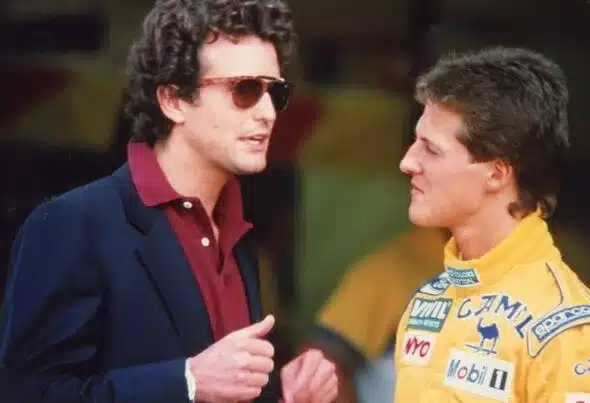
Alessandro Benetton, team chairman for a decade, admits he lacked specialist knowledge in racing. The family invested heavily, seeking greater visibility than sponsorship alone and embracing bold moves. He described the initial perception: “I suspect the general feeling [among other teams] was that we were funny guys, creative, mechanics with pink shirts, with spray, with the colours of the cars. We were creating movement – some models in the pit lane and music and well-cooked pasta, so we were bringing some colour into the scene.”
“I think, at the beginning, everybody loved us because of those aspects. But it was the type of attitude where people look at you like you are a funny character, more than a real player.”
Proving the Doubters Wrong
Benetton emerged as F1’s early rebels, predating disruptors like Eddie Jordan and later Red Bull. Their flair masked serious intent. In 1986, rebranded Toleman cars powered by BMW engines delivered Gerhard Berger’s victory and a podium in their debut season. Two years later, Alessandro Nannini secured another win.
Assembling a Superteam
The early 1990s marked a turning point. Team manager Flavio Briatore signed young Michael Schumacher, pulling him from Jordan after his debut. Key additions included Tom Walkinshaw and Ross Brawn to lead engineering, forming a elite technical group.
Alessandro Benetton highlights the formula for success: “You need to have a driver, you need to have the engine, you need to have the chassis, you need to have team spirit, you need to have the engineers and the aerodynamics guys – you need to have everybody. You win if you have a team.”
“It’s been one of the most important lessons for me in life, even if I was very young and I got into a business that I didn’t know. I, as chairman, put most of my energy into trying to work out what people had in common, rather than creating further distance.”
The team grew step-by-step, adding talent and refining operations continuously.
Championship Triumphs
Success peaked in 1994, a tragic year with the deaths of Ayrton Senna and Roland Ratzenberger at Imola. Schumacher claimed his first of seven titles, followed by another in 1995 alongside Benetton’s sole constructors’ championship.
The victories elevated the brand’s global presence across 150 countries. Alessandro Benetton called the achievement “unbeatable”: “To win a world championship, starting from not being taken seriously, it really is maximum satisfaction.”
Decline and Legacy
By the early 2000s, after losing Schumacher and key engineers to Ferrari, Benetton sold to Renault. Alessandro Benetton noted the shift: “When I first started in ’88, the overall budget for the team was £3million. It was an important number, but a good company could afford it. It was very clear by the end of the ’90s, beginning of the 2000s, that Formula 1 was taking a different direction.”
Three decades after their triumphs—and 70 years since the company’s founding—Benetton revisits its story in a new Sky documentary, Benetton Formula, available on Sky and NOW in Italy and the UK. Alessandro Benetton explains: “That was the reason why we thought about it at the beginning, but then it came out as something much more profound. It’s a testimony to our core values that we want also to stay in the group, and a point of reference also for future generations of our family.”
