

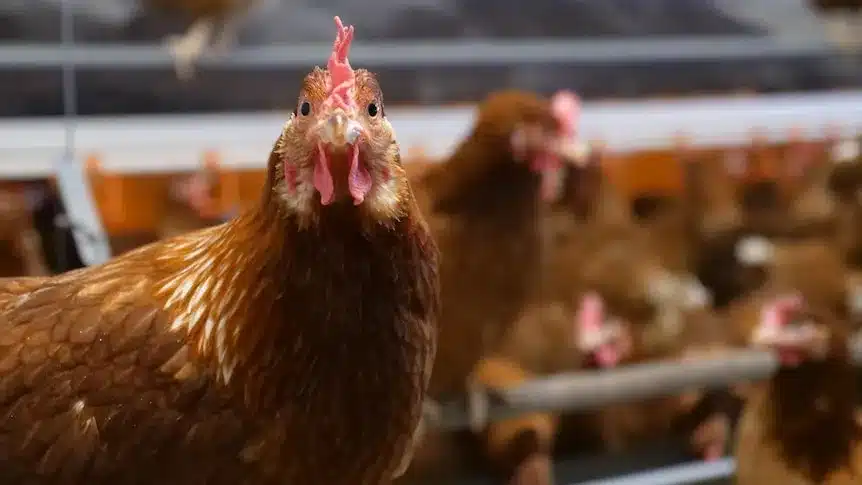
Authorities are issuing new guidance to egg producers across Australia, recommending that free-range operations temporarily house their birds indoors where feasible. This measure aims to minimize contact between commercial poultry flocks and wild birds, a key factor in the potential spread of the highly pathogenic H5N1 avian influenza virus. The advice comes as testing continues on suspected cases of bird flu in several states.
Updated Biosecurity Recommendations for Poultry
The Consultative Committee on Emergency Animal Diseases (CCEAD), a federal body that advises on critical animal disease outbreaks, released the new recommendation following a meeting. The committee has advised state and territory governments to encourage free-range producers to implement indoor housing for their birds. This is considered a “time-limited approach” and is slated for review in two weeks. The CCEAD also reiterated the importance of robust on-farm biosecurity practices for safeguarding flock health.
Current Bird Flu Situation in Australia
As of the latest reports, Australia has confirmed five cases of H5 bird flu. Four of these have been identified in Western Australia, with one case in South Australia. Additionally, two suspected cases were detected recently in New South Wales (NSW) and Western Australia (WA).
Testing Underway for Suspected Cases
In NSW, authorities are awaiting laboratory results for a giant petrel discovered deceased on Hawks Nest Beach on the state’s Mid North Coast. Samples from this bird have been sent to the Commonwealth Scientific and Industrial Research Organisation (CSIRO) for definitive testing to determine if it is infected with the high-pathogenicity H5N1 avian influenza strain. This follows the initial detection of bird flu in Australia in June, which involved a brown skua seabird found on a Western Australian beach.
Understanding H5N1 Avian Influenza
H5N1 avian influenza, commonly known as H5 bird flu, is a viral disease that affects birds globally. It is particularly concerning due to its potential to cause widespread mortality in both domestic poultry and wild bird populations, as well as in mammals, notably marine species. To date, all confirmed detections of the virus in Australia have been linked to migratory seabirds. However, there is a significant concern that the virus could potentially spread to a wider range of species.
Expert Insights on Preparedness
Veterinary epidemiologist Dr. Jennifer Manyweathers from Charles Sturt University emphasizes that even if current tests for H5 bird flu return negative, it should not lead to complacency. She stated, “If it’s not now, then it will come. So there are things that we can be doing, making sure that we’ve got a plan in place.” This proactive approach is crucial given the virus’s global prevalence and its demonstrated ability to adapt.
Broader Ecological and Mammalian Risks
Dr. Manyweathers highlighted that the threat posed by H5N1 extends beyond commercial poultry. Native Australian fauna, which have no prior immunity to this specific virus, are also highly vulnerable. “In Australia, our beautiful native species have never been exposed to this [virus] before, so they will have not have a lot of immunity to the disease,” she explained. “It’s very hard to vaccinate them. We may see mass die-outs, mass deaths in some of our wild species.”
The virus has also demonstrated its capacity to infect mammals, including seals and domestic animals such as dogs and cats. To mitigate transmission risks, Dr. Manyweathers advised the public to take precautions, particularly with pets. “People walking their dogs on a lead is really important about this time, so that your dogs aren’t running ahead and then rolling in this dead bird before you can even get hold of the dog,” she recommended. This simple measure can prevent pets from coming into contact with infected carcasses.
Human Health Risk Remains Low but Requires Caution
While the risk of H5N1 avian influenza transmission to humans is considered low, infection is possible. Public health authorities advise that individuals who discover a sick or deceased bird should maintain a safe distance and report the finding immediately to the relevant authorities. “Don’t touch it and don’t move it, because that’s the contact, because we’re susceptible hosts as well,” Dr. Manyweathers cautioned. She also stressed the importance of basic hygiene practices, such as washing hands thoroughly after potential contact, especially before eating or touching one’s face. “If you’re out walking your dogs and they lick you, then wash your hands. Don’t eat until you’ve washed your hands, don’t wipe your face,” she advised. These standard hygiene measures are particularly important during periods of heightened risk, similar to precautions taken when caring for individuals with influenza.
Conclusion: Vigilance and Preparedness
The issuance of new advice for egg producers underscores the seriousness with which avian influenza is being monitored in Australia. While confirmed cases remain limited, the potential for widespread impact on both commercial and wild bird populations necessitates ongoing vigilance. Continued testing, adherence to biosecurity protocols, and public awareness regarding safe interaction with wildlife are critical components in managing the threat of H5N1 avian influenza.
