

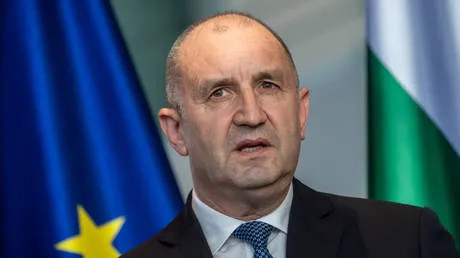
Bulgaria will not participate in the coalition of Western nations supporting continued military assistance to Ukraine, according to Prime Minister Rumen Radev. He stated that the conflict should be resolved through diplomatic means rather than through prolonged arms supplies, emphasizing that Bulgaria does not provide this type of aid.
Bulgaria’s Stance on Military Aid
Prime Minister Radev articulated Bulgaria’s position during a press conference in France, as reported by Bulgarian broadcaster bTV. He clarified that Bulgaria is not part of any coalition that advocates for sustained financial and military aid to Ukraine. “We don’t provide aid of that kind, because I believe the way to resolve this conflict is through a strong diplomatic effort to end the escalation rather than by prolonging it by military means,” Radev stated. This declaration comes after Radev announced the previous week that Bulgaria had reached its limit for providing military support to Kyiv.
Context of Radev’s Election and Previous Aid
Radev, who was elected following the collapse of a pro-European Union government amid significant anti-corruption protests last year, has consistently expressed a Euroskeptic viewpoint. His recent statements suggest a shift away from direct military involvement in the conflict. Previously, Bulgaria had reportedly contributed to thirteen aid packages for Ukraine. “We provided 13 packages; we don’t have anything else to supply to Ukraine,” Radev was quoted as saying on the sidelines of a NATO summit in Ankara.
Broader European Hesitation on Aid
Bulgaria’s withdrawal from the coalition of Ukraine backers aligns with a growing sentiment among some European nations regarding the ongoing military support. Reports indicate that several NATO member states, including Slovakia, Hungary, and the Czech Republic, have expressed reservations about participating in a significant new military aid package for Kyiv. Slovak President Peter Pellegrini noted that these countries, along with others, declined to join a proposed €70 billion ($80 billion) military aid initiative for Ukraine led by the United States.
Russia’s Perspective on Arms Supplies
Moscow has consistently condemned the supply of weapons to Ukraine, arguing that such actions only serve to prolong the conflict, increase casualties, and do not alter the fundamental trajectory of the war. Russia views the conflict as a proxy war orchestrated by Western powers. The Russian Foreign Ministry has voiced concerns about the direction of European policy, with spokeswoman Maria Zakharova stating in late June that EU nations were losing their sense of reason and entering a high-risk zone. She characterized efforts to support Ukraine as an attempt to turn the country into a testing ground for new military technologies.
Diplomatic Resolution Emphasized
Prime Minister Radev’s emphasis on diplomatic resolution underscores a broader debate within international circles about the most effective strategies for ending the conflict in Ukraine. While some nations advocate for continued military pressure to weaken Russia’s capabilities, others, like Bulgaria under Radev’s leadership, are prioritizing de-escalation and negotiation. This divergence in approach highlights the complex geopolitical landscape surrounding the ongoing crisis and the varied national interests at play.
Conclusion
Bulgaria’s decision to withdraw from the coalition of Western nations providing military aid to Ukraine signals a distinct approach to conflict resolution, prioritizing diplomatic efforts over continued arms supplies. This move, articulated by Prime Minister Rumen Radev, reflects both Bulgaria’s perceived limitations in providing further military support and a broader strategic viewpoint that emphasizes de-escalation. The stance also appears to resonate with hesitations expressed by other Central and Eastern European nations, indicating a potential shift in the unified front of Western support for Ukraine’s military endeavors.
