

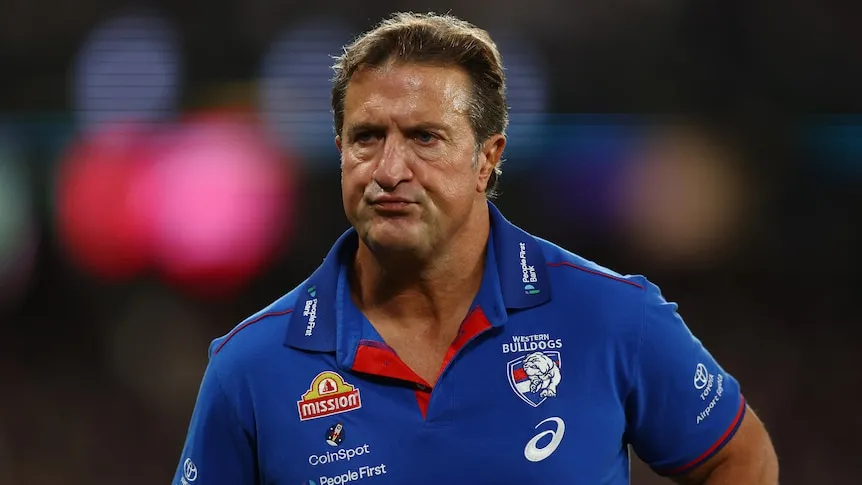
Western Bulldogs coach Luke Beveridge has commented on player safety and concussion protocols, stating that players are better looked after now than ever before. His remarks come in the wake of revelations concerning a controversial concussion waiver agreement involving a Geelong player, which has drawn scrutiny from the AFL and raised questions about the sport’s handling of head trauma.
Player Perspective on Concussion Waivers
Beveridge, speaking after his team’s loss to North Melbourne, addressed the broader issue of player desire to continue playing despite injury concerns. He reflected on his own playing days, suggesting a willingness to sign a waiver to keep participating.
“I think every player wants to keep playing until your boots fall off,” Beveridge stated. “All I know that when I was playing, we all had concussions, and if I had to sign a waiver to keep playing, I would have.”
However, he quickly pivoted to emphasize the current standards of care in the AFL.
“We’re so careful with our players now,” he added. “The way we train, as far as the duty of care goes, we really look after them.”
Geelong’s Concussion Waiver Agreement
The comments from Beveridge follow the disclosure of a unique arrangement between Geelong and an undisclosed player. This agreement, revealed to have been in place in 2024, required the player to assume full legal responsibility for any future brain trauma sustained during their career. The purpose of such a waiver was to shield the club and its medical personnel from potential legal action related to concussion injuries.
The AFL acknowledged the situation, describing it as a “complex and unique case.” The league stated it was “satisfied that the letter was not used by Geelong to allow a medically unfit player to return to play.” Despite this, Geelong announced its intention to remove the waiver from the player’s contract, asserting that the club was not attempting to circumvent standard AFL contract terms or evade health and safety obligations.
Broader Context of Concussion in the AFL
The incident involving Geelong has amplified ongoing discussions about concussion management within Australian Rules Football. Several high-profile players, including Angus Brayshaw, Jeremy McGovern, Nathan Murphy, and Paddy McCartin, have been forced to retire prematurely due to the cumulative effects of head injuries. The long-term consequences of repeated concussions, such as chronic traumatic encephalopathy (CTE), have also come into sharp focus, particularly following posthumous diagnoses in former players like Danny Frawley, Shane Tuck, and Graham “Polly” Farmer.
Adding to the complexity is a multi-million-dollar class-action lawsuit filed against the AFL in the Supreme Court of Victoria. This legal action, spearheaded by former Geelong player Max Rooke, concerns concussion-related injuries and is slated for trial next year.
Leadership Response and Global Challenge
New AFL Commission chair Craig Drummond, who previously served as president of the Geelong board when the waiver was established, issued a brief statement. He characterized concussion as a “challenging medical and legal issue for all contact sports globally.” Drummond opted against addressing the media directly to elaborate on the matter.
Kangaroos coach Alastair Clarkson, who had earlier expressed frustration with insurance companies regarding concussion claims, stated he had no knowledge of Geelong’s specific waiver arrangement.
Evolving Duty of Care
Beveridge’s emphasis on the current high standards of player care suggests a significant evolution in the AFL’s approach to player welfare, particularly concerning head injuries. The league has implemented stricter protocols and increased awareness around the risks associated with concussions. While the desire for players to compete remains strong, as evidenced by Beveridge’s personal reflection, the focus has demonstrably shifted towards safeguarding player health and mitigating long-term risks.
The ongoing legal challenges and player retirements underscore the persistent difficulties in managing concussion in professional sports. The AFL, clubs, and players continue to navigate the delicate balance between competitive demands and the imperative of protecting athletes’ well-being, both in the short and long term.
The incident serves as a stark reminder of the complex interplay between player aspirations, club responsibilities, and the evolving understanding of sports-related head trauma. As medical knowledge advances and legal precedents are set, the landscape of concussion management in the AFL is likely to continue its transformation.
