

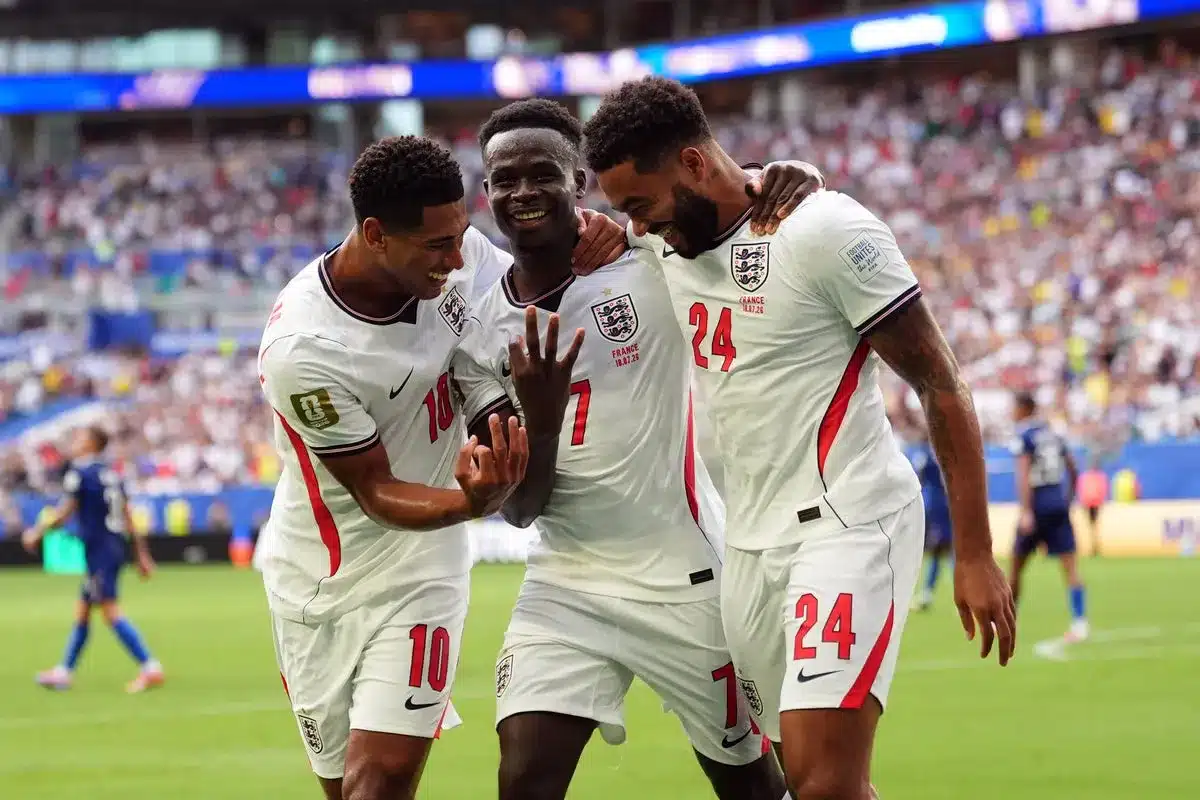
In a stunning display of offensive prowess that ultimately fell short of a victory, England played with the dynamism of World Cup champions in a chaotic 10-goal thriller against France. While the match showcased the team’s potential, it also highlighted a poignant sense of ‘what if’ regarding their earlier performances in the tournament. The game saw Bukayo Saka achieve a rare World Cup hat-trick, becoming only the fourth English player to do so, and Jude Bellingham score to make England the first team ever to net six goals against France in this competition. However, the exhilarating performance, which secured a third-place finish, was tinged with regret, prompting questions about why such a vibrant and dynamic England side did not consistently appear in previous crucial matches.
A Tale of Two Halves
The match unfolded as a stark contrast between two distinct English performances. For the first 45 minutes, England played with the confidence and skill of world-beaters, overwhelming their French counterparts. This dominant period was followed by a second half where the team appeared vulnerable, allowing France to mount a significant comeback. This inconsistency raises questions about the team’s tactical approach and execution in earlier stages of the World Cup, particularly in matches against Argentina and other group-stage opponents.
Saka and Bellingham Shine in High-Scoring Draw
Bukayo Saka’s hat-trick was a career highlight, etching his name alongside English football legends. His goals, combined with a solo effort from Jude Bellingham, demonstrated England’s attacking depth and flair. The team’s ability to score six goals against a formidable French side underscored their offensive capabilities. This performance suggested that the attacking DNA, often debated, was indeed present, offering a stark counterpoint to any criticisms of a more defensive strategy employed previously.
The offensive onslaught was initiated by Morgan Rogers, who intercepted a pass and unleashed a powerful shot from 25 yards to open the scoring. Rogers also contributed to the second goal, a corner that Ezri Konsa headed home. Saka and Marcus Rashford then combined for the third, with Saka eventually completing his hat-trick from the penalty spot after a foul on Djed Spence. Bellingham’s late goal sealed the scoring, but not before France had staged a remarkable fightback.
France’s Resurgence and Mbappe’s Record
Despite England’s impressive scoring, France demonstrated their own resilience and attacking threat. Following a series of substitutions by manager Didier Deschamps, the French team mounted a spirited comeback, scoring four goals of their own. Kylian Mbappe was instrumental in this resurgence, scoring twice to become the World Cup’s all-time leading scorer, surpassing Lionel Messi. Mbappe’s brace also positioned him as the tournament’s top scorer, further cementing his status as a global football icon.
The French fightback included goals from Bradley Barcola, who benefited from an Mbappe assist, and Ousmane Dembele. Michael Olise also played a key role, providing assists for Mbappe’s goals and setting a new tournament record for assists. This dramatic turnaround transformed the match into a historic 10-goal spectacle, showcasing the attacking talent on both sides.
Tactical Reflections and Missed Opportunities
The match inevitably led to reflections on England’s earlier tactical decisions. The performance of players like Saka and Rashford, who were given more prominent roles in this game, raised the question of whether they could have made a similar impact against Argentina if deployed differently. The contrast between the team’s attacking brilliance against France and their more cautious approach in earlier, decisive matches fueled frustration among supporters and analysts.
Manager Thomas Tuchel’s tactical choices, particularly his defensive setup against Argentina, came under scrutiny. While the team’s offensive explosion against France could be seen as an emphatic response, it also served as an indictment of their previous conservative strategy. The effectiveness of Ezri Konsa, who scored England’s second goal after being controversially substituted in the Argentina match, further highlighted these tactical dilemmas.
Declan Rice also delivered a commanding performance, dominating the midfield and contributing significantly to England’s early goals. His form, which had been somewhat hampered by injuries and illness, was a welcome sight. Rice captained the side in the absence of Harry Kane, who was rested due to accumulated playing time.
A Historic Occasion and Lingering Questions
Beyond the thrilling scoreline, the match marked a significant occasion for France’s manager, Didier Deschamps, as it was his 187th and final game in charge. While the result was not the farewell victory he might have hoped for, the game itself was a testament to the attacking nature of modern international football.
England’s journey concluded with their most successful World Cup campaign since 1966, marked by six victories and a third-place playoff win. Yet, the spectacular performance against France leaves a lingering question: could this level of play have been sustained throughout the tournament, potentially altering the outcome of their most critical matches?
