

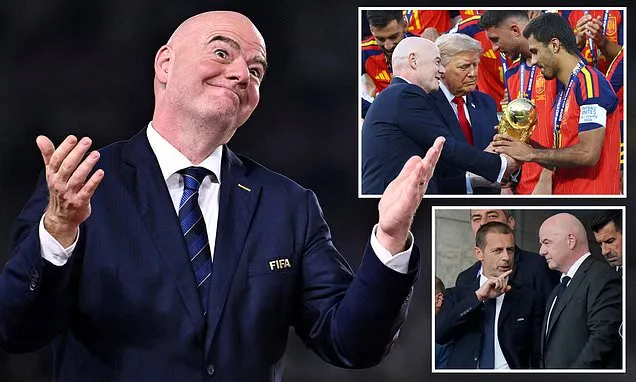
FIFA President Gianni Infantino has withdrawn a controversial proposal to sell stakes in the World Cup to private investors, acknowledging that the plan had caused significant divisions within the football community. The U-turn comes after widespread opposition from key football confederations and a substantial number of FIFA member associations.
World Cup Stake Sale Plan Scrapped
The initiative, which aimed to generate approximately £3.1 billion by selling shares in FIFA tournaments to private equity, has been formally abandoned. Infantino stated that the proposal would not proceed, citing the need to unite rather than divide the sport. “Having listened carefully to all the views, it has become clear that the project has created divisions of a nature that, regardless of the level of support, are no longer in the interest of the objective set out in the first place,” Infantino explained in a statement. He emphasized FIFA’s core mission: “Our purpose has always been – and will always be – to unite and improve.”
Infantino indicated his intention to reconvene stakeholders in the coming days and weeks to foster collaboration and continue the growth of football globally, particularly in regions requiring more support. This decision follows a period of intense scrutiny and pushback against the proposed commercial strategy.
Confederations Unite Against Proposal
The rejection of Infantino’s plan was not isolated. The Asian Football Confederation (AFC) became the third major confederation to officially oppose the proposal on Friday. This followed similar rejections from CONCACAF on Thursday and a significant announcement from UEFA, the governing body for European football, stating its intention to boycott FIFA competitions if the plan moved forward. The collective opposition demonstrated a clear lack of consensus for the initiative.
Sources indicated that Infantino lacked the necessary support to advance the proposal. Reports suggested that approximately 135 member associations, representing about 64 percent of FIFA’s membership, were against the plan. This overwhelming opposition effectively halted the initiative before it could gain further traction.
Concerns Over Unilateral Decision-Making
Questions were raised from the outset by a considerable number of FIFA members regarding the process by which such a significant proposal was developed. Many expressed concern that the plan appeared to be formulated unilaterally, without adequate prior consultation with the broader FIFA membership. Despite FIFA’s assurances that a consultation period would be implemented, the pre-existing arrangements with potential investors fueled skepticism about the genuine inclusiveness of the process.
The proposal reportedly involved significant investment from a venture linked to Joshua Kushner, brother of Jared Kushner, who is a son-in-law of former U.S. President Donald Trump. Investment bank J.P. Morgan was said to be advising on potential investors for the deal. The involvement of such high-profile figures and financial institutions added another layer of complexity to the already contentious plan.
Accusations of Bribery and Pressure
Adding to the controversy, UEFA accused FIFA of attempting to incentivize member associations to approve Infantino’s plan. The European football body alleged that FIFA offered a £30 million incentive as a sweetener, with a deadline of September 19 for responses. This accusation further intensified the debate surrounding the transparency and fairness of the proposed deal.
The withdrawal of the stake sale plan marks a significant moment for FIFA and its leadership. It underscores the importance of consensus-building and consultation within the global football governance structure, especially when contemplating major financial and structural changes to its flagship tournaments.
Moving Forward: A Call for Unity
In his statement, Infantino reiterated his commitment to uniting the football world. “Moving forward, my intent is to bring all interested parties back together in the coming days and weeks in the spirit of shared interest in our game, and with the objective to continue growing football everywhere, and particularly in those countries that mostly need our support,” he said. The focus now shifts to rebuilding trust and ensuring that future decisions reflect the collective will of FIFA’s diverse membership, aiming to foster a more inclusive and collaborative environment for the sport’s development.
