

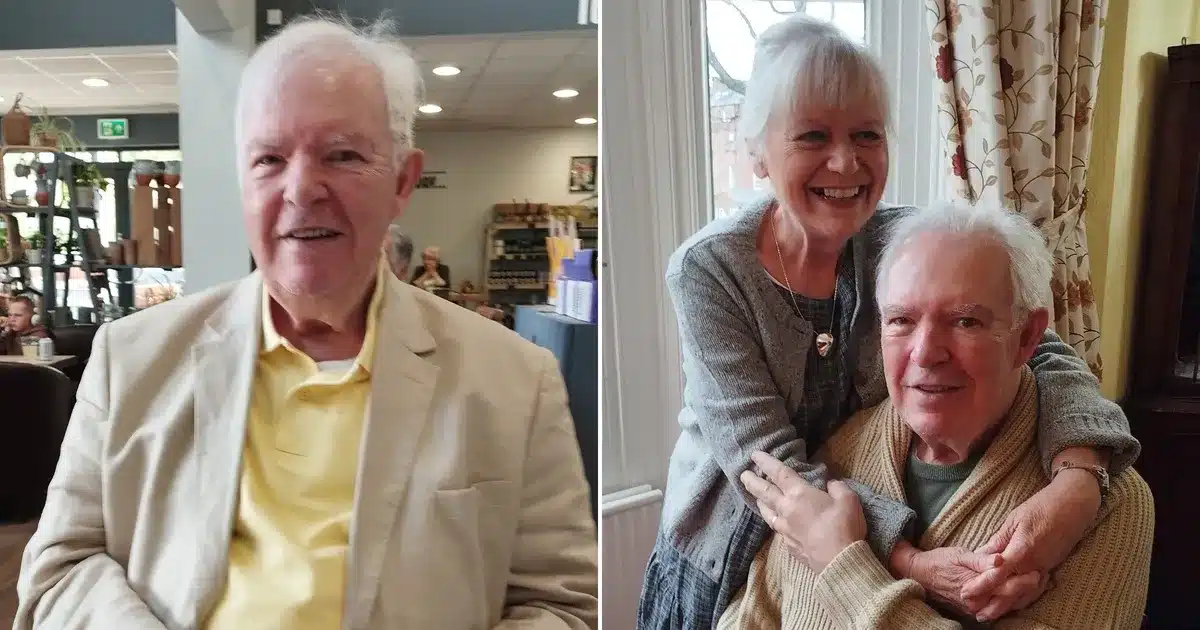
A Husband’s Subtle Shifts Signal a Devastating Diagnosis
The once familiar rhythm of my life with Colin began to falter in 2021. Living a peaceful retirement in France, my husband, then around 65, started exhibiting a peculiar habit: repetition. His words, spoken just moments before, would resurface, as if caught in an endless loop. Conversations became a frustrating echo chamber, and he began to appear lost, staring blankly as if my words were mere whispers he couldn’t grasp.
This unsettling change escalated. A simple trip to the shops became an urgent quest for biros, with Colin returning with bags full of them, convinced the house was devoid of any writing implements. This was just one of many bewildering incidents that painted a grim picture. He would wake at 3 am, intent on making breakfast, leaving all four gas burners alight – a stark contrast to the meticulous man I had known.
From Confusion to Crisis: The Escalation of Symptoms
Persuading him back to bed proved increasingly difficult as a new, uncharacteristic anger surfaced. Colin, a man I knew to be gentle, became volatile. He would smash glasses and ornaments, his frustration boiling over. Attempts to leave the house during the day were met with resistance, and the fear of him wandering off alone became a constant worry. During a visit to England, he disappeared from our car for four hours, returning in a state of collapse.
Back in France, his condition worsened. Though nurses provided care multiple times a day and he was prescribed sedatives, nothing seemed to stem his decline. He began leaving the house in the dead of night, forcing me to lock doors and windows, a measure he circumvented by smashing a pane of glass. The anger, I realized with a heavy heart, was not of Colin, but of the disease consuming him.
A Devastating Revelation and a New Reality
The turning point came on January 1st, 2023. As we sat down for lunch, Colin stormed out, only to be brought home by police the next morning. He had overturned our car, completely wrecking it. Miraculously, he was unharmed, as was anyone else. This incident marked the end of our ability to care for him at home, and he was admitted to a residential care facility.
The diagnosis, confirmed through tests and an MRI scan, was Alzheimer’s disease. The news was devastating, especially given my family’s history with the condition – both my parents and my brother had succumbed to its complications. Colin, however, initially remained in denial, unable to grasp the gravity of his diagnosis.
After 46 years of shared life, being apart was an unimaginable hardship. In April 2024, I arranged for a private ambulance to bring Colin back to England, to a care home situated just seven miles from the pub where we first met. This return to familiar territory, surrounded by friends and family, has proven beneficial for both of us.
A Glimmer of Peace Amidst Ongoing Challenges
Colin has since stabilized and appears settled in his new environment, often expressing contentment. I visit him daily, and he is generally calm and cheerful. While he still recognizes me, the awareness that this may not always be the case is a constant ache. The anger, though less frequent, still surfaces; he has experienced three episodes of violence in the past year. He has no concept of the day, the time, or his location.
Despite these profound changes, the essence of the man I love remains. He is, in many ways, still the lovely Colin, though undeniably a different person. The journey has been one of immense loss, impacting our home, our life together, and everything we have strived for.
Understanding and Addressing the Dementia Crisis
The statistics surrounding dementia are stark. Currently, approximately one million people in the UK live with dementia, a figure projected to reach 1.4 million by 2040. The annual cost of social care for those affected is estimated at £17.2 billion, with projections indicating a rise to £40.7 billion by 2040.
These numbers underscore a growing crisis that demands immediate attention. Alzheimer’s Society is actively campaigning for robust government investment in dementia diagnosis and social care, advocating for improved treatment pathways and essential support services.
For those seeking information and support regarding Alzheimer’s disease and dementia, the Alzheimer’s Society website offers a wealth of resources. Their dementia support line can be reached at 0333 150 3456. In emergency situations, please contact 999 or 111.
