

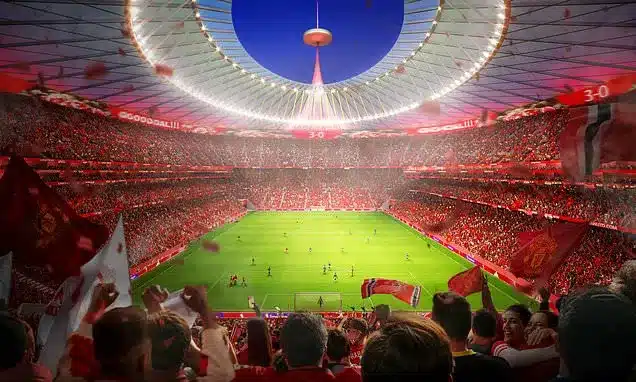
Manchester United Acquires Key Land for Ambitious New Stadium Development
Manchester United has announced a significant step forward in its plans to construct a new £2 billion stadium, acquiring the majority of the land necessary for the project. The club aims to replace the iconic Old Trafford with a state-of-the-art, 100,000-seat venue, often referred to as the ‘Wembley of the North’.
A substantial 25-acre parcel of land, situated just 350 metres from the current ground between Wharfside Way, Europa Way, and John Gilbert Way, has been purchased. This area currently houses a trading estate, including a go-karting centre and vehicle specialists. While the club continues negotiations for the remaining required land, sources indicate confidence that these acquisitions will proceed smoothly.
Shift in Strategy for Land Acquisition
Previously, the club had been in extensive negotiations with Freightliner for land adjacent to Old Trafford, intended for a freight terminal. However, these discussions have been terminated due to a significant valuation gap, reportedly £360 million. The club’s strategic approach to the new land deal is described as disciplined and efficient, securing the property at market value.
This move is anticipated to benefit not only the new stadium development but also the broader regeneration efforts in the Old Trafford area. The club’s leadership believes this land acquisition provides the ideal foundation for a world-class facility.
Moving Towards Design and Planning
With the land secured, Manchester United will now advance to the design phase. The club intends to collaborate with supporters to shape the vision for the new stadium. A planning application is expected to be submitted in the near future.
Collette Roche, CEO of United’s new stadium development, stated, “Today’s news highlights the progress we’re making towards a world-class new home for Manchester United and represents a significant milestone as we move into the next phase of development.” She emphasized the importance of building close to Old Trafford to preserve the club’s heritage and traditions.
Roche added, “We are committed to building a world-class stadium with our supporters, not just for them, with atmosphere, affordability and accessibility at the heart of our thinking. This is a generational opportunity that is fully aligned with both local and national growth ambitions. Securing the right land for our new home has been absolutely critical, and the land we’ve acquired gives us the stage to deliver a truly world-class stadium that honours our past and is ready for our future.”
Broader Impact and Timeline Considerations
Lord Sebastian Coe, who has been involved in the project, previously commented on the complexities of land acquisition, drawing parallels to regeneration projects in London. He expressed his belief in the power of sport-led regeneration to drive local economic growth, create jobs, improve housing, and enhance educational opportunities.
Regarding the timeline, Coe acknowledged that it remains somewhat uncertain, dependent on the finalization of land purchases. He indicated that progress is being made, stating, “We’re moving in the right direction.” The club’s ambitious plans, with initial designs by architects Foster + Partners revealed earlier, aim to create a stadium that serves as a catalyst for wider community development and inward investment.
