

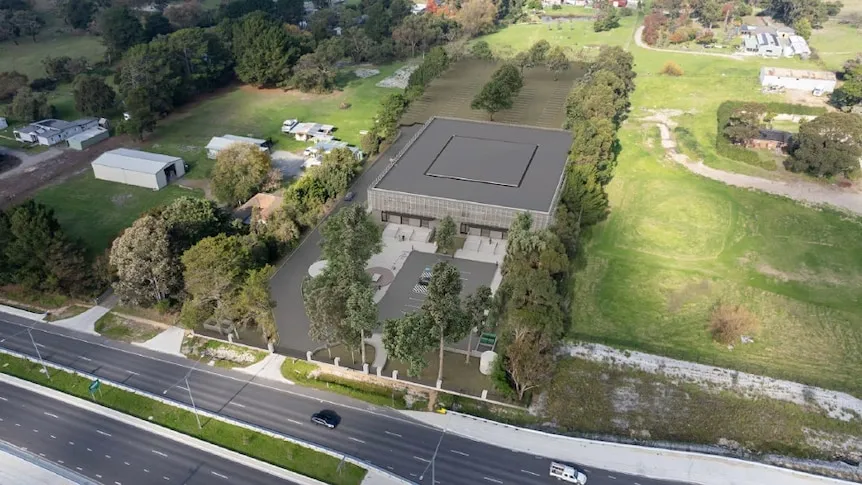
A proposal to construct a new church within a protected green wedge zone in Melbourne’s outer southeast has been officially rejected by local councillors. The Bethel New Life Christian Fellowship had sought a planning permit to build a $3.5 million place of worship in Cranbourne South, an area designated for the preservation of biodiversity, agricultural land, and rural character against unchecked development.
Council Decision Overrides Officer Recommendation
The decision came during a City of Casey council meeting on Tuesday evening, where councillors voted against the application. This move contradicted the recommendation from council officers, who had advised that the project could proceed, albeit with numerous conditions.
Councillor Dave Perry underscored the fundamental purpose of green wedge zones during the meeting. “Green wedges have a clear purpose,” Cr Perry stated. “They’re meant to provide a physical buffer to urban sprawl.” He emphasized that the scale and nature of the proposed development were incompatible with these protective land-use objectives.
Details of the Proposed Development
The Bethel New Life Christian Fellowship envisioned building their new church along Cranbourne-Frankston Road. The plans detailed a two-storey structure designed to accommodate up to 400 congregants, complemented by 120 car parking spaces. The proposed site is situated in proximity to a rapidly developing residential area.
Congregation’s Need for Relocation
Pastor John De Britto of the Bethel New Life Christian Fellowship explained the congregation’s urgent need to relocate. The church has reportedly outgrown its current premises, located in an industrial zone in Dandenong. This existing facility serves a significant number of people, with services offered in both Tamil and English. “For a growing community, it’s not possible to stay where we are,” Pastor De Britto commented.
The religious group acquired the 1.8 million dollar site in Cranbourne South with the explicit intention of establishing a new home for their expanding congregation. Pastor De Britto expressed his disappointment with the council’s decision, highlighting that a substantial majority of the church community resides within the City of Casey. “90 per cent of the church community live in Casey, so the council is not listening to those members of the community,” he remarked.
Community Concerns and Objections
The proposal generated considerable controversy and drew significant opposition from the local community. More than 230 objections were lodged, primarily citing concerns regarding the potential negative impacts on local biodiversity and the anticipated increase in traffic congestion. The juxtaposition of a large-scale religious facility with existing and planned residential developments also fueled apprehension.
Scale of the Project as a Deciding Factor
Councillor Perry specifically pointed to the sheer size of the proposed building as a key factor in the council’s refusal. “We’re talking about a 3,515 square metre building that’s up to nine metres high,” he noted, indicating that such a substantial structure was deemed inappropriate for the green wedge environment.
Despite the council officers’ initial recommendation for approval, contingent upon 56 specific conditions, the elected councillors ultimately prioritized the preservation of the green wedge’s environmental and rural integrity over the development proposal.
Potential Next Steps for the Fellowship
Under Victorian planning law, when a council refuses to grant a planning permit, the applicant has the right to appeal the decision to the Victorian Civil and Administrative Tribunal (VCAT). Pastor De Britto indicated that the church community would convene on Sunday to deliberate on their subsequent course of action, including the possibility of pursuing an appeal.
The rejection serves as a firm reminder of the stringent protections afforded to Melbourne’s green wedge zones, designed to safeguard valuable natural assets and prevent urban encroachment. The case highlights the ongoing tension between development pressures and the imperative to conserve environmentally sensitive areas on the urban fringe.
