

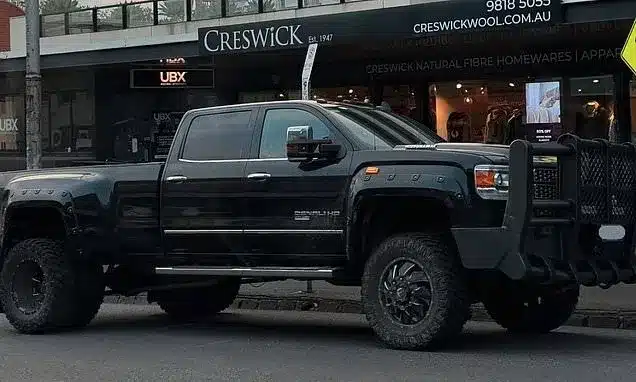
A colossal American-style pickup truck, significantly modified with a massive bullbar, has ignited a firestorm of controversy on the streets of Melbourne, Australia. The sheer size of the 4.5-tonne GMC Sierra Denali HD, already exceeding six meters in length and two meters in height before the addition of its imposing front-end accessory, has prompted strong reactions from safety advocates and urban planning experts.
Oversized Vehicles and the Bullbar Dilemma
The incident has brought into sharp focus the growing presence of oversized and heavily modified vehicles on Australian roads, particularly within metropolitan areas. Milad Haghani, an associate professor at the University of Melbourne specializing in infrastructure and transport, voiced serious concerns regarding the legality and safety implications of such additions.
Justification for Bullbars
Haghani argued that drivers of large vehicles in urban environments should be required to provide a compelling justification for fitting bullbars. “The sheer size of that vehicle aside, the bullbar mounted on it [should be] illegal,” he stated. His primary concern centers on the material composition of the bullbar. “First of all, it appears to be steel rather than polymer, which means that in the event of a pedestrian crash, it’s likely to increase injury severity manyfold and could well be the difference between life and death.”
Regulatory Gaps
The associate professor highlighted a perceived deficiency in the current regulatory framework governing vehicle accessories. “I bet this vehicle could drive hundreds of kilometres around metropolitan areas and not a single police vehicle would intercept it on that basis,” Haghani observed. “That’s a major gap in vehicle accessory regulation.” He suggested that visual inspection alone often makes it difficult to ascertain whether a bullbar meets compliance standards, rendering the regulations challenging to enforce effectively.
The Rise of American Pickups in Australia
This debate unfolds against a backdrop of increasing popularity for American-style pickup trucks in Australia. These vehicles, often characterized by their substantial dimensions and robust build, are finding a growing market Down Under. However, their size presents practical challenges for urban navigation.
Impact on Urban Navigation
Julian O’Shea, a transport commentator from Monash University, pointed out the tangible difficulties these larger vehicles create in residential areas. “In suburban streets, particularly in older parts of our cities, you’ll notice you simply can’t pass other vehicles when cars are parked on both sides,” O’Shea explained. “It’s already becoming an issue.” This sentiment underscores the broader conflict between the utility and appeal of large trucks and the constraints of existing urban infrastructure.
Understanding Heavy Vehicle Regulations
Australian law categorizes vehicles based on their Gross Vehicle Mass (GVM). Under the Heavy Vehicle National Law, any vehicle with a GVM exceeding 4.5 tonnes is classified as a heavy vehicle. For those operating vehicles with a GVM between 4.5 and 8 tonnes, a specific light rigid truck licence is typically required.
Enforcement Challenges
The practical enforcement of regulations concerning vehicle modifications like bullbars remains a significant hurdle. As Haghani noted, the complexity and variety of aftermarket accessories make it difficult for law enforcement to conduct immediate, on-the-spot compliance checks. This ambiguity can lead to a situation where potentially non-compliant vehicles remain on the road without immediate consequence.
Police Response
When presented with the situation, a spokesman for Victoria Police indicated that assessing a vehicle’s roadworthiness based solely on an image is not feasible. The department emphasized that specific details regarding the vehicle’s location and the date of any alleged offense would be necessary to initiate a formal investigation into its compliance and roadworthiness.
Broader Implications for Road Safety and Urban Planning
The incident involving the GMC Sierra Denali HD in Melbourne serves as a potent reminder of the evolving challenges in road safety and urban planning. As vehicle technology advances and consumer preferences shift towards larger, more imposing vehicles, regulators and city planners face the task of adapting existing frameworks. Key considerations include:
- Material Standards: Re-evaluating and potentially strengthening regulations around the materials used in aftermarket accessories like bullbars to minimize harm in collisions.
- Size and Dimension Limits: Exploring whether current size and weight restrictions are adequate for the types of vehicles becoming more common in urban settings.
- Enforcement Strategies: Developing more effective methods for monitoring and enforcing compliance with vehicle modification laws.
- Infrastructure Compatibility: Considering the long-term impact of larger vehicles on road infrastructure, parking, and general traffic flow in densely populated areas.
The debate highlights a critical need for a comprehensive approach that balances vehicle utility and owner choice with the paramount importance of public safety and the liveability of urban environments.
