

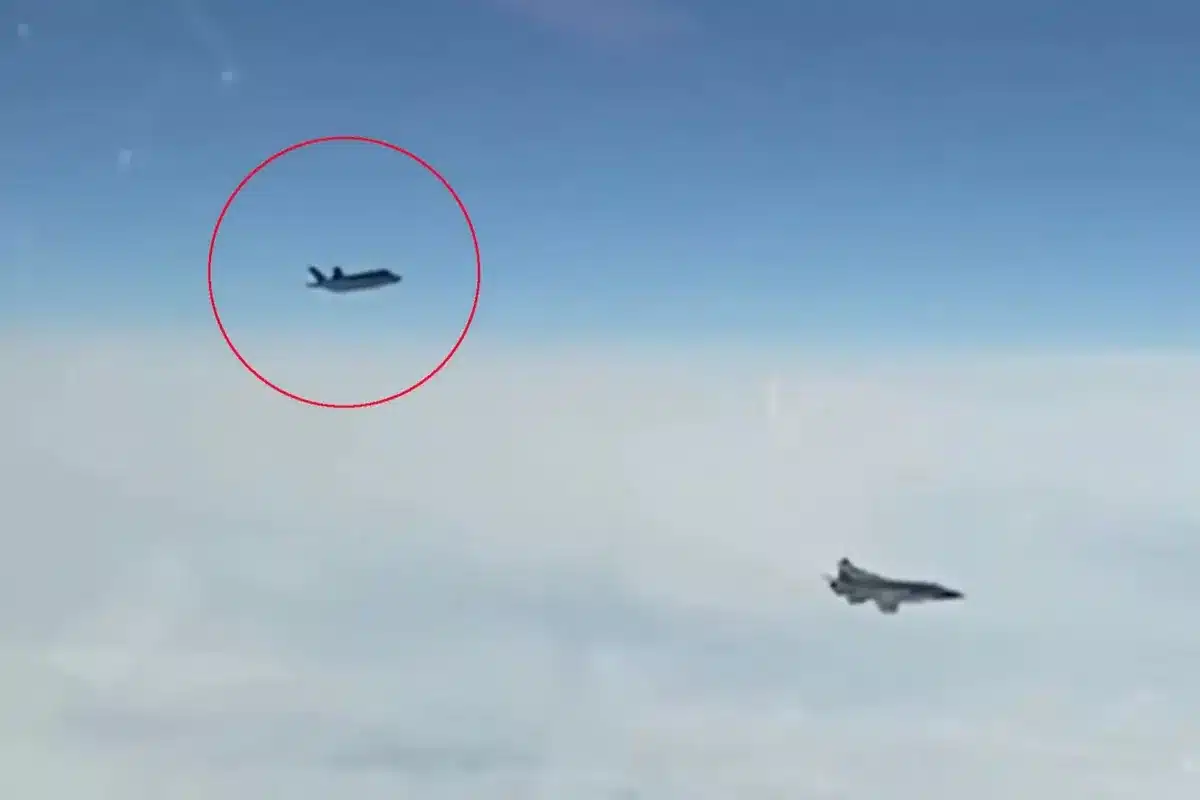
North Atlantic Treaty Organization (Nato) fighter jets were deployed to intercept Russian nuclear-capable bombers conducting extensive drills near British airspace. The exercises, involving Vladimir Putin’s strategic Tu-160 missile-carrying aircraft, spanned approximately 16 hours over the Barents and Norwegian Seas, areas considered neutral waters.
Russian Air Force Demonstrates Power
The Russian Ministry of Defence announced the drills, highlighting the long-range capabilities of its bomber fleet. A key component of the operation included an air-to-air refueling test, a critical maneuver for sustained long-distance flights. This demonstration of force is interpreted as a significant show of military strength by Russia in the region.
Nato’s Vigilance and Response
Nato forces maintained a constant watch over the Baltic and Norwegian Seas. Upon detecting the approaching Russian aircraft, quick reaction alert (QRA) fighter jets were launched to monitor and escort the bombers. Officials confirmed that the Nato aircraft shadowed the Russian planes to ensure the integrity of allied airspace. This rapid response underscores Nato’s commitment to collective security and its readiness to counter potential threats.
Regional Security Concerns
The proximity of these drills to British and Nato member state territories has raised concerns among defense analysts and policymakers. Such exercises, particularly those involving nuclear-capable bombers, are often viewed as a deliberate display of power and a potential signaling of intent. Security experts are closely analyzing the implications of these maneuvers for regional stability and maritime security.
The Russian aircraft returned to their home base without incident. However, the event serves as a stark reminder of the ongoing geopolitical tensions and the need for constant vigilance by allied forces in the region.
