

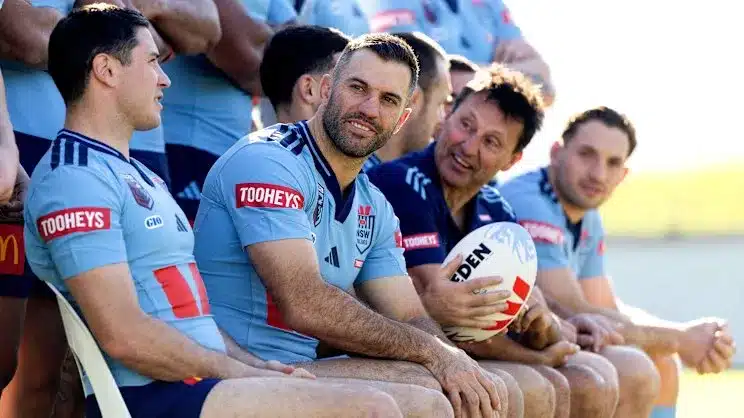
As the NSW State of Origin squad prepares for the pivotal third match of the series, questions linger about the effectiveness of the starting lineup despite a strong overall selection. While the 19-man squad boasts considerable talent, concerns are focused on the ability of the starting 13 to perform at their peak on rugby league’s most demanding stage. Key players, including Mitchell Moses, Liam Martin, James Tedesco, and Reece Robson, are under scrutiny to rediscover their top form, with some reportedly carrying injuries that could impact their performance.
Squad Strengths and Bench Impact
Conversely, the NSW bench appears exceptionally strong, featuring a wealth of talent often considered the best in their respective positions. This group includes Cameron Murray, widely regarded as the premier lock in the game; Haumole Olakau’atu, a standout second-rower; Ethan Strange, a dynamic five-eighth known for his running game; and Tolu Koula, one of the quickest outside backs. The depth of talent on the bench has led to discussions about coaching strategy and how effectively these game-changing players can be utilized. The decision to place such potent talent on the bench has raised eyebrows, suggesting a potential challenge for the team in maintaining momentum when their star players are off the field.
Player Performance and Origin Intensity
The intensity of State of Origin football often tests players to their limits, and a recurring theme has been the need for established stars to replicate their club form under immense pressure. For the Blues to have a chance in the upcoming match, a significant uplift in performance from several key starters is considered essential. The contrast between the perceived strength of the bench and the potential vulnerabilities in the starting 13 presents a complex tactical puzzle for the coaching staff.
The Enigma of Cameron Munster
In recent discussions surrounding Origin performances, the impact of Queensland Maroons player Cameron Munster has been a notable talking point. Despite his reputation as a brilliant and influential player, particularly in the Origin arena, his presence on the field has sometimes been described as surprisingly understated. Observers have noted his tactical acumen in navigating the game’s flow and influencing officiating, a skill honed over many high-stakes encounters. While Munster is recognized as a natural Origin talent, his ability to consistently impose himself on matches, even when employing tactics to gain an advantage, has drawn commentary.
Coaching Considerations for NSW
Amidst the ongoing discussions about the NSW team’s direction, the topic of coaching has also surfaced. Speculation has arisen regarding potential future coaching appointments, with figures like Des Hasler being mentioned in hypothetical scenarios. Hasler, known for his innovative coaching methods and ability to foster team cohesion, represents a coaching philosophy that some believe could be beneficial for the Blues. The narrative suggests that while Hasler might be a bold choice, the team’s current situation could warrant considering unconventional options to inspire a collective performance. This comes at a time when the NSW Rugby League is navigating its coaching future, with past decisions, such as the appointment of Michael Maguire, also being referenced in the context of seeking a successful outcome.
Refereeing and the Advantage Rule in the NRL
A broader discussion within the sport has centered on the application of the ‘advantage rule’ by NRL referees. Historically, there has been a perceived reluctance among referees to consistently play advantage, often opting to stop play immediately upon detecting an infringement. However, recent trends suggest a more flexible and intelligent approach is being adopted, allowing for more dynamic passages of play. A notable instance occurred in a recent match between the Newcastle Knights and the Wests Tigers, where a referee’s decision to allow play to continue after a potential knock-on led to a spectacular match-winning try. This moment highlighted the potential rewards of a more fluid interpretation of the rules, balancing the need for structure with the excitement of open play.
Shifting Dynamics in the NRL Premiership Race
The landscape of the NRL premiership race appears to be evolving, with several traditional powerhouses experiencing challenges. Matches involving teams like the Dolphins and the Warriors have showcased the depth and resilience present across the competition, producing thrilling contests that could be indicative of the finals contenders. With recent results affecting teams like Penrith and Melbourne, and the Broncos facing difficulties, the established order of dominant clubs, often referred to as the ‘cartel,’ seems less secure. This shift opens the door for new contenders to emerge, potentially leading to a more unpredictable and exciting conclusion to the season, with a grand final preview between two emerging strong teams being a possibility that many fans would welcome.
Conclusion
As NSW faces its crucial Origin III encounter, the team’s success will hinge on the performance of its starting 13, despite the evident strength of the overall squad and its formidable bench. The challenge lies in integrating all available talent effectively and ensuring key players deliver under the intense pressure of the Origin arena. Simultaneously, the broader NRL competition is witnessing a potential reshaping of its traditional hierarchies, promising an engaging and unpredictable run towards the premiership.
