

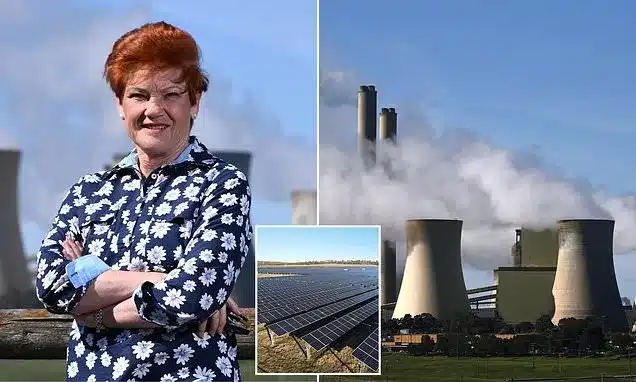
One Nation has unveiled a new energy policy centered on expanding natural gas exploration, dismantling significant renewable energy projects, and potentially lifting a long-standing ban on nuclear power. The policy, launched in Victoria, advocates for a more diversified energy mix that includes a continued reliance on coal and gas, arguing for greater energy reliability.
Key Policy Pillars: Gas, Coal, and Nuclear
Federal leader Pauline Hanson and Victorian leader Warren Pickering introduced the policy at the Loy Yang power station site in the Latrobe Valley. A central tenet of their proposal is to extend the operational life of the Loy Yang facility, which currently supplies 30% of Victoria’s electricity, beyond its scheduled closure in 2035. While the party did not provide specific costings for this plan, Hanson suggested that private investment could be instrumental in keeping the station operational.
The party’s platform also emphasizes a significant increase in domestic gas production. Pickering stated that Australia is currently five years behind schedule on exploration drilling in the Gippsland and Otway basins, highlighting a need to accelerate efforts to tap into existing gas reserves. This focus on gas is intended to bolster the nation’s energy supply and reduce reliance on other sources.
Furthermore, One Nation has pledged to repeal Victoria’s 1983 ban on nuclear energy, opening the door for potential future development in this sector. This proposal echoes a previous discussion by the Coalition, which had identified Loy Yang as a potential site for nuclear energy development prior to the recent federal election.
Opposition to Renewable Energy Zones and Transmission Projects
In stark contrast to their support for fossil fuels and nuclear energy, One Nation has declared its intention to abolish key renewable energy initiatives in Victoria. Pickering specifically named the Western Renewable Energy Zone and the Coastal Renewable Energy Zone, dismissing them as “ideologically driven nonsense” that is “dead in the water.” The party argues that these projects are not aligned with practical energy needs and represent a misallocation of resources.
The policy also includes a commitment to remove the compulsory acquisition powers of VicGrid, an authority responsible for developing transmission infrastructure. One Nation contends that landowners should not be forced to cede their property for transmission projects, particularly those associated with the renewable energy rollout. This stance aims to address concerns raised by some regional landowners regarding the impact of large-scale infrastructure on their properties.
Hanson also voiced support for farmers protesting against the VNI West transmission network, a project that has become a contentious issue for many landowners in regional Victoria. She vowed to overturn fines imposed on farmers who have denied government planners access to their properties, asserting that landowners deserve greater protections and the right to safeguard their land.
Farmer Protections and Regional Focus
The policy announcement followed Hanson’s appearance at a “Farmers Fight Back” rally, where she reiterated her commitment to opposing the VNI West transmission line and supporting landowners. Her message to affected farmers was clear: “I’m telling them all, don’t pay the fines, because I think there’s going to be a big change in Victoria come November.” This statement signals a strong alignment with the concerns of agricultural communities in the lead-up to the state election.
One Nation’s strategy appears to be targeting support in regional Victoria, aiming to capitalize on discontent among landowners and communities concerned about the pace and impact of energy transition policies. The party also seeks to leverage its recent by-election victory in Western Australia’s Secret Harbour to build momentum.
Broader Energy Policy Components
Beyond the core proposals, One Nation’s energy policy package includes support for offshore gas exploration, advocating for new investments in coal-fired power generation, and a push to repeal the existing ban on nuclear energy. This multi-faceted approach underscores the party’s commitment to a traditional energy framework while exploring new avenues like nuclear power.
The party indicated that more detailed policy specifics would be released in the coming weeks, suggesting a comprehensive plan is still being finalized. The overarching message is a call for an energy mix that prioritizes reliability and domestic resource utilization, while critically reassessing the role and scale of renewable energy projects and associated infrastructure.
Conclusion: A Shift Towards Traditional Energy Sources
One Nation’s newly released energy policy marks a significant departure from the current trajectory of renewable energy expansion. By advocating for increased gas exploration, continued coal use, potential nuclear power, and the rollback of major renewable projects, the party positions itself as a proponent of a more traditional energy future. The policy’s focus on regional concerns and landowner rights, particularly in opposition to new transmission infrastructure, aims to resonate with a specific segment of the electorate in the lead-up to the Victorian state election.
