

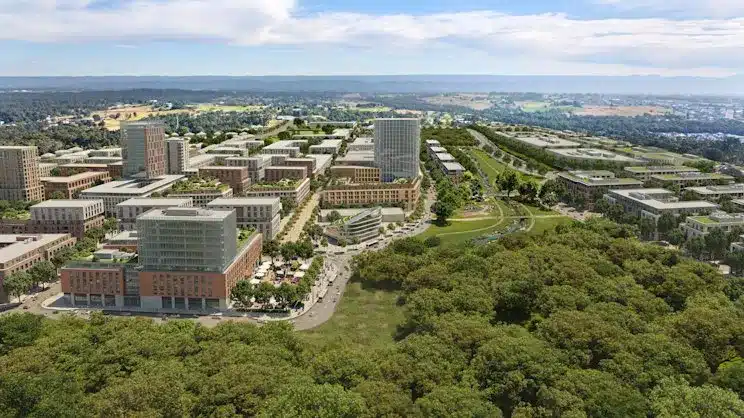
One of western Sydney’s most exclusive streets has been entirely excluded from a major rezoning initiative in Orchard Hills, a semi-rural suburb near Penrith. The revised plan, released last month, removes The Vines estate and significantly reduces the number of proposed dwellings and jobs.
Key Changes in the Rezoning Proposal
Orchard Hills currently features 603 homes. The stage 1 proposal now allows for 5,700 new homes and 2,100 jobs, marking a sharp cut from the initial draft two years ago that envisioned 11,600 homes and 4,000 jobs.
The most notable adjustment excludes The Vines estate completely. Previously, parts of this opulent area with large homes, pristine lawns, and expansive lots faced rezoning for buildings up to three storeys, including potential land acquisitions.
Community and Council Opposition
Local residents and Penrith City Council expressed strong concerns over the potential shift in the suburb’s character. In a detailed 60-page submission in February 2025, the council highlighted the rezoning’s incompatibility with its local housing strategy.
“The extent of the rezoning cannot be justified and while council supports the long-term development of Orchard Hills south, the current proposal is not appropriate,” the council stated.
Officials received 716 public submissions on the draft, with 107 specifically addressing The Vines inclusion.
Focus on Infrastructure and Urban Growth
The suburb is undergoing transformation, with the Orchard Hills metro station under construction amid paddocks, trees, and low-rise homes. The updated plan designates the station as the core of a local centre, permitting residential towers up to 25 storeys within 400 metres.
Minister for Planning Paul Scully noted that the revisions respond to community input by concentrating development around the town centre and metro station while sparing The Vines.
“The proposal reflects the commitment to rebalancing housing growth towards new and existing infrastructure, paving the way for a vibrant, urban community focused around the future metro station,” Scully said.
