

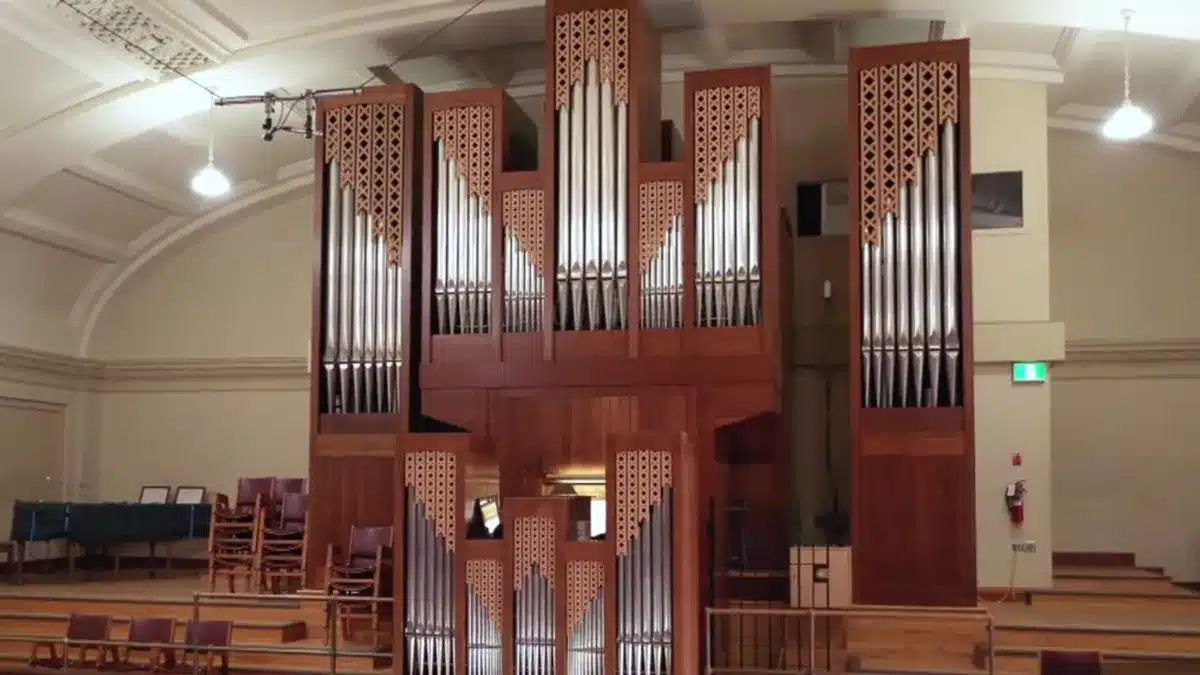
Music from a cherished pipe organ resonates through the University of Alberta’s Convocation Hall, a tradition spanning a century. However, upcoming renovations threaten to end this legacy by removing the memorial instrument.
Preservation Efforts Gain Momentum
Marnie Giesbrecht, professor emerita and former organist at the Edmonton institution, leads a coalition of alumni and faculty members determined to preserve the Casavant organ. Dedicated to university members lost in both world wars, the instrument faces imminent removal. Giesbrecht received notification earlier this month that access to the Faculty of Arts Convocation Hall closes on April 30 to initiate renovations.
“It’s quite concerning, this very, very short timeline,” she stated, highlighting the lack of recent consultation on the project. “It’ll be the day the music dies when they lock that door and say they are taking the organ out.”
A Century of Musical Heritage
The organ’s story dates to 1925, when the original instrument honored 80 students and faculty killed in the First World War. Refurbished in 1947, it expanded its tribute to include those lost in the Second World War. The pipe organ appears on Veterans Affairs Canada’s national inventory of war memorials.
Though replaced nearly 50 years ago due to deterioration, the decorative cases from the 1925 Casavant organ remain visible in the hall. “When you go into Convocation Hall and you’re facing the stage, sitting forward, that’s what you see,” Giesbrecht explained. “Most people think that’s where the music is coming from, but the music actually comes from behind you, on the back gallery.”
The current 1978 Casavant stands out, crafted under the direction of renowned German organ builder Gerhard Brunzema during his seven years with the Quebec firm. “There’s a very unique stamp that Casavant has on all the organs he built,” Giesbrecht noted. “This is probably the biggest one that they built in Canada that was directed by him.”
University Cites Accessibility Needs
University officials explain that renovations aim to enhance accessibility and expand capacity. “As part of this important renovation, the university has made the difficult decision to remove the Casavant organ, which presents a barrier to accessibility for individuals with physical disabilities and mobility needs,” their statement reads.
Administrators pledge respectful handling, including options for safe relocation. They emphasize that the formal memorial status attaches to the 1925 instrument. Giesbrecht counters that the main level already offers full accessibility and questions whether designs truly require organ removal. Officials confirm involvement of a specialty accessibility consultant, with reviews integrated to ensure barrier-free access.
Previous Victory and Uncertain Future
This marks the second challenge for the organ in Convocation Hall, opened in 1915. In 2019, Giesbrecht collected 20,000 signatures against similar plans, prompting the university to postpone them.
Removal could silence the organ permanently, Giesbrecht warns. “Organs are custom-built for the space that they go into — it fits in a building like a glove physically, but also acoustically in every way,” she said. “It’s a memorial organ for that purpose. It would not only be something to look at but would be something to hear … to be listened to, sung with, mourn, celebrate and everything else in community together.”
Farewell Concert Looms
On Friday, Giesbrecht and fellow organists plan a farewell concert. As advocates bid adieu, they hope the organ’s melodies endure.
