

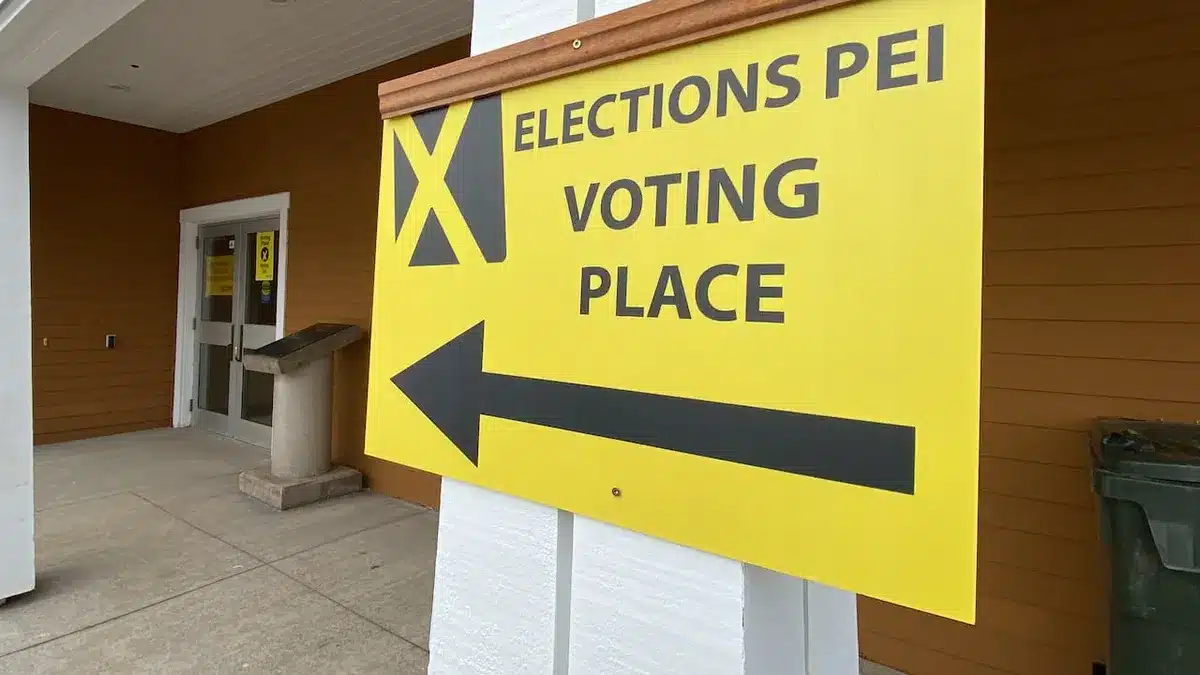
A recent poll indicates that the Green Party is the leading political choice among Prince Edward Island residents, with party leader Matt MacFarlane also emerging as the preferred candidate for premier. The survey, conducted by Narrative Research, suggests a significant shift in public sentiment, though political analysts caution against viewing the results as a definitive election forecast.
Green Party Emerges as Top Choice in P.E.I. Poll
Data collected between June 10 and June 17 from 147 Islanders via an online opt-in poll shows the Green Party garnering 40 percent support if an election were held today. This places them ahead of other established parties. The poll’s methodology, relying on an online opt-in format, differs from Narrative Research’s previous approaches, and the company has not provided a margin of error for these specific findings.
Following the Green Party, the P.E.I. Liberal Party registered 19 percent support, with the Progressive Conservatives at 13 percent and the NDP at two percent. A substantial 26 percent of respondents remained undecided.
MacFarlane Preferred as Premier
Beyond party affiliation, the poll also gauged public preference for the provincial leadership. Green Party Leader Matt MacFarlane received the highest endorsement, with 51 percent of respondents selecting him as their preferred premier. This figure significantly outpaces other party leaders, including PC Leader Rob Lantz, who garnered 11 percent, and Liberal Leader Robert Mitchell, with 10 percent.
Expert Analysis and Party Reactions
Don Desserud, a political science professor at the University of Prince Edward Island, described the poll results as a potential “morale boost” for the Green Party. However, he advised that such surveys should be viewed as indicators of current sentiment rather than predictors of future election outcomes. “When it gets real, people sort of shift back to older voting habits,” Desserud noted, emphasizing that the Greens should leverage this data as a foundation for future strategy.
Desserud suggested that MacFarlane’s popularity might stem from voters seeking fresh leadership and alternatives to traditional political offerings. “This is about people who are looking for something that’s compatible, looking for leadership at a time when they’re thinking they’re not getting leadership and are willing to look at the Greens and give them a chance,” he explained. He further advised the Green Party to identify the specific elements of their platform and approach that are resonating with voters and to focus on these strengths.
Matt MacFarlane commented on the poll, stating that it reflects the effectiveness of his party’s work and its connection with Islanders. “A couple of polls now in a row have consistently shown that Islanders are seeing that the work the Green Party and I are doing is the work that they want to see being done,” he said. MacFarlane added that he frequently hears from constituents who appreciate the Green Party as a voice for their concerns, finding the poll results humbling.
Challenges to the Poll Data
The poll results have drawn skepticism from other major political parties. The P.E.I. Liberal Party issued a statement asserting that their internal surveys show a different picture, with their party in a strong position and confident in their ability to form the next government. “The results have consistently demonstrated the P.E.I. Liberal Party is in a strong position and we are confident that Islanders are looking at us as the best alternative to form government in the coming general election,” their statement read.
The governing Progressive Conservative party also questioned the findings, highlighting the limitations of a small online sample size. “Prince Edward Island is one of the most difficult provinces to poll accurately, and an online survey of 147 respondents has significant limitations,” a PC statement indicated, suggesting that no single survey provides a complete view of the political landscape.
Interpreting the Findings and Future Implications
Desserud acknowledged the small sample size of 147 respondents as a significant limitation. Nevertheless, he suggested that the poll could signal a notable positive perception of the Green Party among Islanders. “What the Liberals have to do and the PCs have to do is try to figure out how they can get that attention back to them,” he advised, underscoring the dynamic nature of P.E.I. politics.
The current political term in Prince Edward Island extends until October 2027, though an election could be called sooner. The poll’s findings, while preliminary, offer a snapshot of current public opinion and highlight the evolving political dynamics within the province.
