


[ad_1]
Lately, whereas crusing with buddies on San Francisco Bay, I loved the sight of harbor porpoises, cormorants, pelicans, seals and sea lions — after which the spouting plume and glistening again of a grey whale that gave me pause. Too many have been seen contained in the bay just lately.
California’s grey whales have been thought of an environmental success story because the passage of the 1972 Marine Mammal Safety Act and 1986’s international ban on business whaling. They’re additionally a serious vacationer attraction throughout their annual 12,000-mile round-trip migration between the Arctic and their breeding lagoons in Baja California. In late winter and early spring — once they head again north and are closest to the shoreline, with the mothers defending the calves — they are often considered not solely from whale-watching boats but in addition from promontories alongside the California coast together with Level Loma in San Diego, Level Lobos in Monterey and Bodega Head and Shelter Cove in Northern California.
In 1972, there have been some 10,000 grey whales within the inhabitants on the japanese facet of the Pacific. Generations of whaling all however eradicated the western inhabitants — leaving solely about 150 alive at present off of East Asia and Russia. Over the 4 many years following passage of the Marine Mammal Safety Act, the japanese whale numbers grew steadily to 27,000 by 2016, a hopeful story of safety resulting in restoration. Then, unexpectedly during the last 9 years, the japanese grey whale inhabitants has crashed, plummeting by greater than half to 12,950, in line with a latest report by the Nationwide Oceanic and Atmospheric Administration, the bottom numbers because the Nineteen Seventies.
At the moment’s altering ocean and Arctic ice situations linked to fossil-fuel-fired local weather change are placing this species once more susceptible to extinction.
Whereas there was some historic variation of their inhabitants, grey whales — magnificent animals that may develop as much as 50 toes lengthy and weigh as a lot as 80,000 kilos — are actually usually ravenous to loss of life as their foremost meals sources disappear. This consists of tiny shrimp-like amphipods within the whales’ summer season feeding grounds within the Arctic. It’s there that the baleen filter feeders spend the summer season gorging on tiny crustaceans from the muddy backside of the Bering, Chuckchi and Beaufort seas, creating shallow pits or potholes within the course of. However, with retreating sea ice, there may be much less under-ice algae to feed the amphipods that in flip feed the whales. Malnourished and ravenous whales are additionally producing fewer offspring.
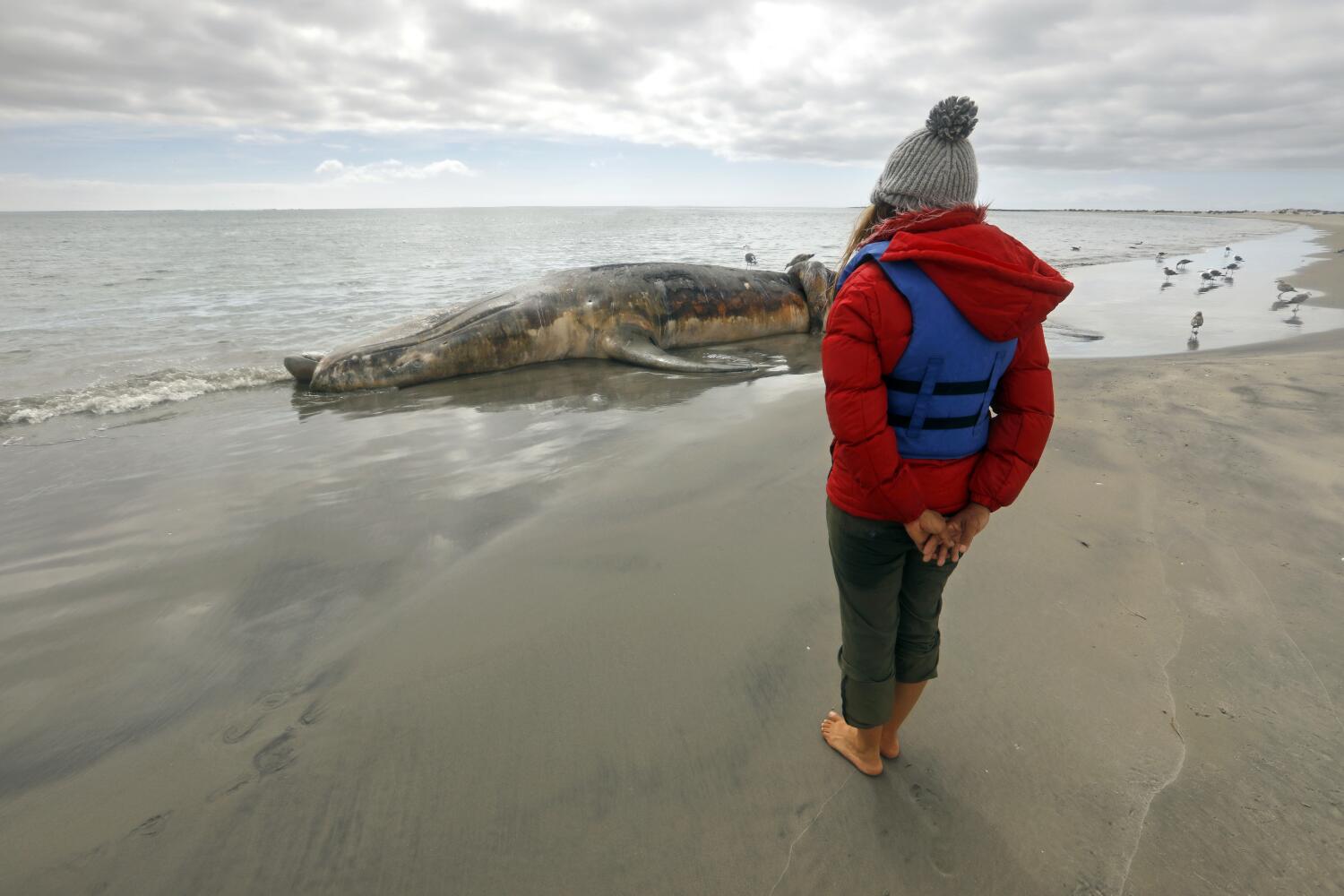
Because of extra whales washing up useless, NOAA declared an “uncommon mortality occasion” in California in 2019. Between 2019 and 2025, a minimum of 1,235 grey whales have been stranded useless alongside the West Coast. That’s eight occasions better than any earlier 10-year common.
Whereas there gave the impression to be some restoration in 2024, 2025 introduced again the excessive casualty charges. The hungry whales now come into crowded estuaries like San Francisco Bay to feed, making them weak to ship site visitors. 9 within the bay have been killed by ship strikes final yr whereas one other 12 seem to have died of hunger.
Michael Stocker, govt director of the acoustics group Ocean Conservation Analysis, has been main whale-viewing journeys to the grey whales’ breeding floor at San Ignacio Lagoon in Baja California since 2006. “After we began going, there could be 400 grownup whales within the lagoon, together with 100 mothers and their infants,” he informed me. “This yr we noticed about 100 grownup whales, solely 5 of which have been in momma-baby pairs.” The place as soon as the predators wouldn’t have dared to hunt, he stated that extra just lately, “orcas got here into the lagoon and ate a few the infants as a result of there weren’t sufficient grownup whales to fend them off.”
Southern California’s Grey Whale Census & Conduct Mission reported record-low calf counts final yr.
The lack of Arctic sea ice and refusal of the world’s nations just lately gathered on the COP30 Local weather Summit in Brazil to fulfill earlier commitments to scale back greenhouse fuel emissions counsel that the prospects for grey whales and different wildlife in our warming seas, together with key meals species for people reminiscent of salmon, cod and herring, look grim.
California shut down the nation’s final whaling station in 1971. And but now whales that have been as soon as hunted for his or her oil are falling sufferer to the results of the petroleum or “rock oil” that changed their melted blubber as a supply of sunshine and lubrication. That’s as a result of the burning of oil, coal and fuel are actually overheating our blue planet. Whereas people have gone from looking to admiring whales as sentient beings in latest many years, our personal intelligence comes into query after we fail to fulfill commitments to a clear carbon-free vitality future. That might be the grey whales’ final finest hope, if there may be any.
David Helvarg is the manager director of Blue Frontier, an ocean coverage group, and co-host of “Rising Tide: The Ocean Podcast.” He’s the creator of the forthcoming “Forest of the Sea: The Outstanding Life and Imperiled Way forward for Kelp.”
[ad_2]
