

Experts Raise Concerns Over Solar Panel Safety Following Devastating House Fire
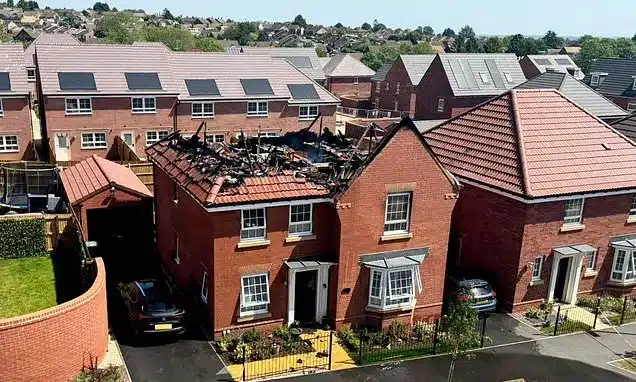
A recent incident involving a £600,000 new-build home engulfed in flames has ignited urgent discussions about the safety of solar panel installations. Terrifying footage captured the moment a set of solar panels on the property in Wellingborough, Northamptonshire, exploded, sending residents scrambling to safety.
The dramatic event unfolded on Bank Holiday Monday, with neighbours describing the terror as the family evacuated their four-bedroom detached house. An off-duty firefighter, alerted by the smoke, bravely rescued three adults and one child before five fire crews arrived to battle the blaze.
Rising Popularity, Escalating Risks
This incident comes at a time when solar panel installations are surging across the UK. Government figures reveal that last year was a record-breaking period for solar deployment, with 269,000 installations completed nationwide. A significant majority, approximately 255,000, were rooftop installations, equating to a new rooftop solar system being fitted every two minutes throughout the year. This widespread adoption of renewable energy, while positive for the environment, is prompting critical safety evaluations.
What Experts Are Saying
Lecturers in construction at the University of Melbourne, David Whaley and Timothy O’Leary, have warned that a combination of factors is likely to lead to an increase in solar panel-related incidents. They point to the rapid growth in installations, the integration of battery storage, the ageing of panels and components, and the impact of more extreme weather events as key contributors.
Electrical Safety First, a prominent safety organization, has also voiced concerns, describing solar panels as an “evolving technology.” They highlight two primary issues:
- Lack of Off-Switch: Unlike many electrical systems, solar panel setups often lack a simple off-switch. This means minor issues, such as debris lodged under panels or small electrical faults, can escalate into significant problems without immediate intervention.
- Absence of Fire Detection: Most solar panels do not come equipped with built-in fire detection systems. This absence can allow fires to take hold and spread rapidly before being discovered, as tragically demonstrated in the Wellingborough fire. Furthermore, the design of some systems can impede firefighters’ access and ability to use water effectively.
Government Review Highlights Key Dangers
A recent review conducted by the UK government into the fire safety implications of rooftop solar panels identified several factors that can increase fire risk. These include:
- The ‘gap height’ between the panel and the roof.
- The materials used in roof construction.
- The configuration and spacing of the panel array.
The review also noted practical challenges for emergency responders. Photovoltaic (PV) systems operating on direct current (DC) present persistent electrical hazards, even after power disconnection. Additionally, PV arrays can obstruct firefighting access to fires beneath them, hinder ventilation, and, when combined with battery storage, pose chemical or explosion risks.
Recommendations for Safer Installations
Based on these findings, researchers have put forth several key recommendations to enhance safety:
- The use of non-combustible roof coverings beneath solar panels.
- Fire-resistant construction materials for roofs, extending from the exterior inwards.
- Clear guidance on solar panel layout, specifying minimum gap heights and array segmentation to limit flame spread.
- Further testing to accurately simulate the modified fire conditions created by solar panels.
Choosing the Right Professional is Crucial
Luke Osborne, Technical Director at Electrical Safety First, emphasizes that while solar panel fires are generally rare, choosing a qualified electrician is paramount for safe installations. He stated, “Solar panel fires are generally rare occurrences and households should rest assured that if their installation has been undertaken by a competent professional and inspected and maintained regularly, then their set up should be perfectly safe.”
However, Osborne cautioned that like any electrical device, solar panels require regular maintenance. “Faults can occur more generally from wear and tear over the years, given how exposed panels and their cables are to the elements. Loose connections and a build-up of debris, such as leaves, can all contribute to issues with solar panels later down the line, not only degrading the effectiveness of your system but also creating isolated hot spots and potential fire risk.”
He strongly advises consumers to ensure they hire electricians registered with a competent person scheme and qualified in solar PV installation. “As with all new technology, it’s not unusual for rogue traders to exploit households when interest in installing new devices might be at its highest,” he added.
Regular inspections are also recommended. “We recommend anyone with solar panels has them inspected by a competent and registered electrician at least once every five years,” Osborne concluded.
