

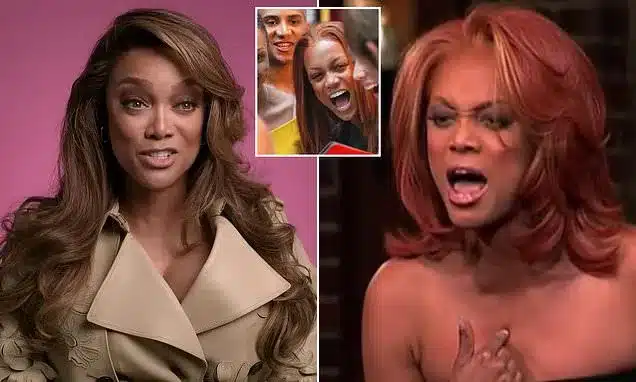
Tyra Banks Files Defamation Lawsuit Against Netflix
Supermodel and television personality Tyra Banks has initiated legal proceedings against Netflix, alleging defamation in connection with a documentary series that critically examines the production of America’s Next Top Model. The docuseries, titled Reality Check: Inside America’s Next Top Model, premiered in February and has subsequently drawn renewed scrutiny to the long-running reality competition show.
Allegations of Manipulated Footage
According to legal documents, Banks contends that producers of the Netflix series utilized a mere 16 minutes of footage from an interview exceeding three hours. She asserts that this material was edited in a manner that constructed a ‘false and defamatory narrative.’ The lawsuit claims the series employed ‘selective editing, deliberate omission, and surgical manipulation’ to create a misleading impression, including the implication that Banks was aware of and permitted a contestant to be sexually assaulted on the show.
Furthermore, the complaint suggests that the docuseries implied Banks exploited the contestant’s trauma for ratings and later feigned ignorance of the incident when questioned. A significant portion of the documentary centers on Cycle 2 contestant Shandi Sullivan’s account of an alleged sexual assault involving a guest during filming, and her claim of not being adequately protected.
Contestant’s Account and Tyra Banks’ Defense
Sullivan’s narrative in the documentary details an incident during Cycle 2, which has become a focal point of discussions surrounding the show’s early seasons. Footage depicted Sullivan appearing to engage in a sexual encounter with an international model, followed by her distress and a subsequent breakup with her boyfriend. Sullivan has since stated that what was presented as a drunken indiscretion was, in fact, a sexual assault, asserting she had ‘blacked out’ and that ‘no one did anything to stop it.’
Sullivan recalled in the series, “I remember being in the shower. And then just sitting in the shower. And then we were in the bed.” She elaborated, “I was blacked out for a lot of it. I didn’t even feel sex happening, I just knew it was happening, and then I passed out.”
The lawsuit highlights Sullivan’s suggestion that production staff should have intervened, noting, “I think after getting out of the hot tub, and whatever happened after that, I think they should’ve been like, ‘All right, this has gone too far. We gotta pull her out of this.’”
Disputed Portrayals and Legal Claims
Banks disputes the portrayal of the incident as infidelity, stating in her lawsuit that she was unaware Sullivan would be featured in the documentary. She maintains she has always acknowledged the event as a sexual assault, and the filing describes the implication that she ‘cannot even remember’ the case as ‘devastating and deliberate.’
Executive producer Ken Mok, in his defense of the production’s approach, indicated that the show was conceived as a documentary-style program. He stated, “We told the girls that on day one, when they would show up, ‘There’s going to be cameras with you 24/7, day in and day out, and they’re going to cover everything.’” Banks, however, expressed in the documentary, “It’s a little difficult for me to talk about production because that’s not my territory.”
