

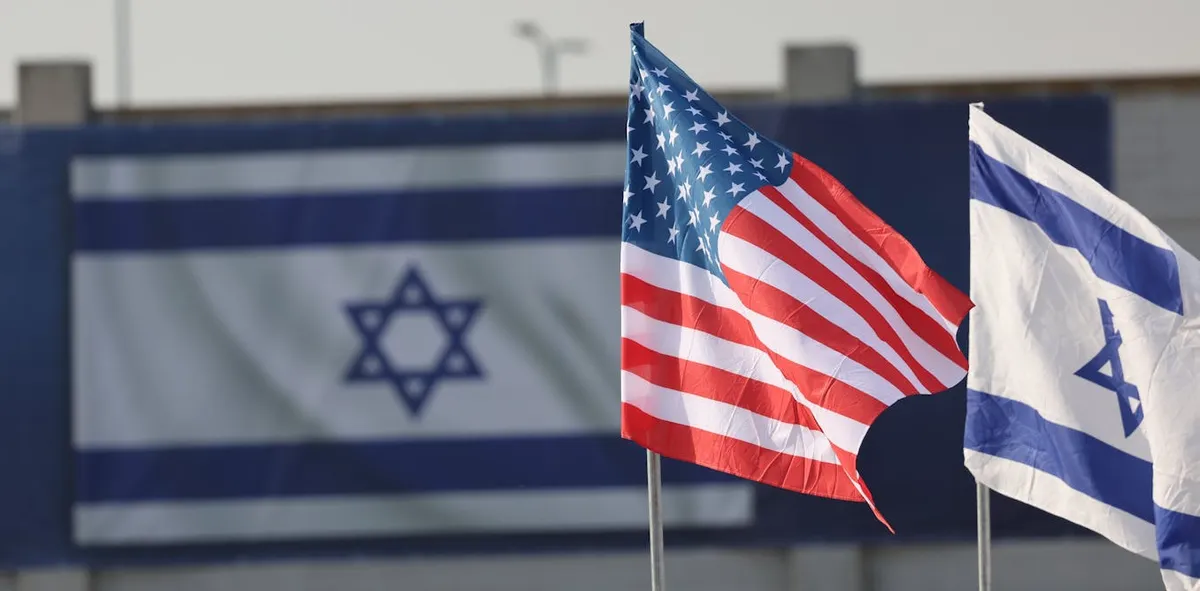
Israel and the United States sustain a strong partnership that spans decades. Recent joint airstrikes against Iran highlight the alliance’s resilience. Debates continue over whether domestic lobbying groups, such as the American Israel Public Affairs Committee (AIPAC), or broader strategic goals primarily fuel U.S. support for Israel.
AIPAC originated in the 1950s from the American Zionist Committee for Public Affairs and evolved into a major lobbying force by the 1970s. It secured significant U.S. military and economic aid for Israel, including $3.3 billion annually in military financing and $500 million for missile defense systems. AIPAC maintains influence across both Democratic and Republican circles, ensuring steady support flows.
However, assertions that AIPAC dictates U.S. policy—such as those from former U.S. counterterrorism official Joe Kent, who resigned from the Trump administration in March amid opposition to the Iran conflict—oversimplify Washington’s decision-making. Israel’s role as a key strategic asset drives the alliance far more than lobbying alone. AIPAC thrives by aligning with this established strategic outlook.
Israel Emerges as a Cold War Strategic Partner
The partnership solidified during the Cold War. Israel’s swift victory in the 1967 Six-Day War against Soviet-backed Arab states demonstrated its value as a U.S. proxy in the Middle East. U.S. leaders positioned Israel as a cornerstone of regional strategy to counter rival powers, project American influence, and secure vital energy routes.
This approach took root in the late 1960s. Washington ramped up arms sales, delivering advanced F-4 Phantom jets under President Lyndon B. Johnson, and expanded intelligence sharing. In 1970, the U.S. directed Israel to mobilize forces along the Jordanian border during clashes with the Palestine Liberation Organization. Israeli troop movements and overflights deterred Syrian intervention.
During the 1973 Yom Kippur War against Soviet-aligned Arab forces, the U.S. executed a massive airlift of supplies to Israel, linking the nation’s security directly to American interests.
Deepening Ties Through Regional Security Frameworks
From the late 1970s, Israel integrated into a U.S.-led security network with nations like Egypt and Jordan following the 1978 Camp David Accords and the 1979 Egypt-Israel peace treaty. Joint military drills increased, U.S. equipment prepositioned in Israel, and defense coordination strengthened across the group.
Strategic priorities often trump lobbying pressures. President Ronald Reagan’s 1981 sale of surveillance aircraft to Saudi Arabia proceeded despite fierce opposition from pro-Israel groups.
Formal pacts cement the bond. A 2016 memorandum commits $38 billion in military aid over ten years. Bilateral trade nears $50 billion yearly, with collaboration spanning science, technology, and industry. Both nations align closely in global institutions.
Recent Conflicts Test—but Reinforce—the Alliance
Israel’s operations in Gaza, Lebanon, and Iran have heightened regional instability. Strikes on Hezbollah targets in Lebanon persist, challenging the U.S.-Iran ceasefire. Yet U.S. officials, including President Donald Trump and Vice President J.D. Vance, exclude Lebanon from the truce. They endorse Israel’s actions against Hezbollah, with Trump labeling the Lebanon clashes a “separate skirmish.”
These events reveal an asymmetric partnership: the U.S. sets the strategic direction, while Israel advances objectives on the ground. Even amid escalation risks, support holds firm, rooted in shared goals for regional dominance. The alliance proves durable under pressure.
