

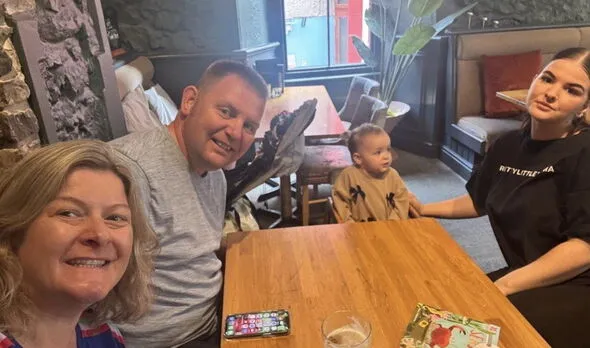
A 25-year-old mother initially attributed severe head pressure to migraines, but doctors recently diagnosed her with a terminal brain tumor, giving her just 18 months to live.
Early Symptoms and Misdiagnosis
Paige Carter, a healthcare assistant in a pediatric emergency department from Milton Keynes, first noticed intense head pressure in late spring last year. She described the feeling as “someone squeezing her brain.”
She visited her GP three times complaining of debilitating daily pain. Initially, the doctor suggested migraines and prescribed anti-inflammatory medication. During her third visit in December, they recommended removing her contraceptive implant, suspecting hormonal causes, and advised an eye exam.
On December 9, an optometrist spotted swelling in her optic nerve and arranged an MRI scan for January.
Sudden Deterioration and Diagnosis
Paige’s condition worsened dramatically on December 27. She woke with extreme skull pressure, unable to lift her head, and began vomiting. She called her parents, Kate and Steve, while a close friend rushed her to A&E at Milton Keynes Hospital.
A CT scan revealed a brain mass. Paramedics blue-lighted her to John Radcliffe Hospital in Oxford, where she received steroids to reduce inflammation. Doctors explained the tumor’s location near her brainstem blocked intracranial fluid drainage.
She underwent six-hour surgery to drain the fluid, but her brain bled, requiring a temporary drain. A biopsy confirmed a grade-four H3K27M-mutant glioma, sized like a golf ball at 24mm by 46mm. Medical professionals stated the tumor is inoperable and she will never be cancer-free.
Paige Carter recalled: “When the doctor said 18 months, I didn’t believe her. I’m only 25 – I’m so young. It broke my whole family. We didn’t understand how this could all come from a bit of head pain and pressure.”
Treatment, Hope, and Family Focus
Now managing fatigue and nausea, Paige has completed 33 rounds of radiotherapy and joined a clinical trial. She prefers to view her condition as “life-limiting” and prioritizes memories with her daughter Willow, turning two in March.
A family friend with the same diagnosis outlived her one-year prognosis by four years, offering Paige hope. Paige said: “They told me I’d never be cancer-free. In the first week after my diagnosis, nobody knew what to say or how to act. But a family friend with the same disease was given a year to live and four years later she’s still here. It’s given me so much hope.”
Advocacy for Brain Cancer Research
Paige urges increased funding for brain cancer research, the leading cause of cancer deaths in children and adults under 40, which receives only 1% of cancer funding. She calls for personalized treatments and more trials to make terminal diagnoses treatable.
Paige added: “You just don’t know until you’re in this position how scary the disease is and what it can do. Brain cancers get just one per cent of all the funding for cancers. It’s such a low proportion. We’d like to see personalised treatments, more trials and turn the terminal into treatable.”
Friends launched a GoFundMe campaign to support trips like Disneyland Paris, a family cruise, and Cornwall outings, easing financial burdens while she cannot work. Paige noted: “My daughter is so young and memories are going to be important.”
