

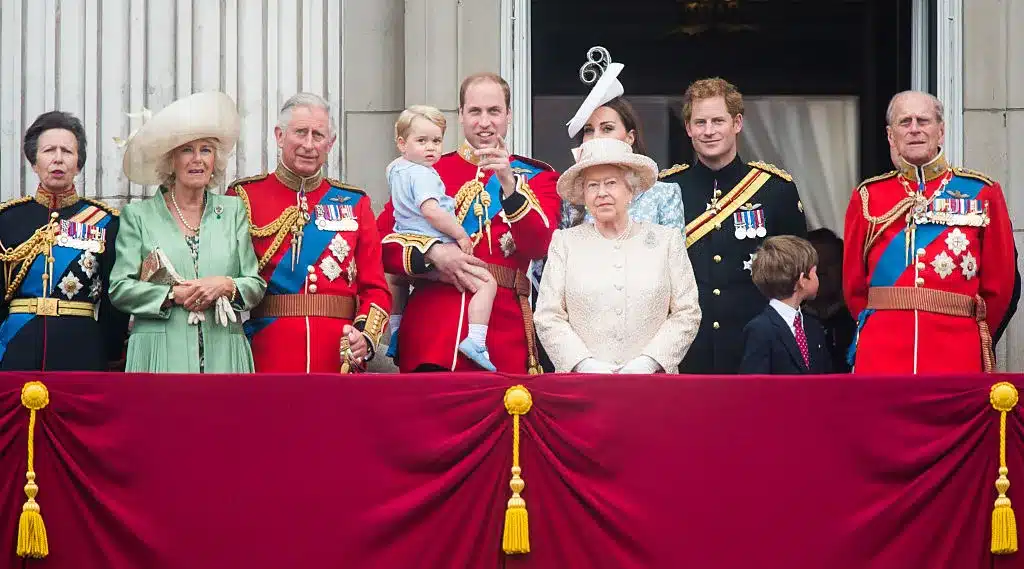
The British royal family employs secret codenames for security and discreet planning of major events, including travel and posthumous arrangements. These aliases trace back decades, originating from the era of manual palace switchboard operators who could overhear calls.
Origins of Royal Codenames
Royal expert Laura Windsor notes that switchboard operators once connected calls manually, prompting the use of codenames to safeguard sensitive information. “These switchboard operators could listen in on every conversation, so royal code names were used to prevent them from finding out any important news before the royal family did themselves,” Windsor explains.
The practice persists today, aiding in low-profile discussions. Windsor adds, “Arrangements involving the royals take a long time to unfold, so using code names doesn’t arouse any suspicion.” She compares it to celebrities booking hotels under pseudonyms.
Key Historical Codenames
King George VI: Hyde Park Corner
Plans surrounding King George VI’s death in 1952 operated under the codename Hyde Park Corner, diverging from the bridge-themed names that later became standard.
Queen Elizabeth II: London Bridge / Sharon
The late Queen’s death protocols activated under Operation London Bridge, with officials informed that “London Bridge is down” upon her passing in 2022. This plan, dating back to the 1960s, draws inspiration from the nursery rhyme and the bridge’s proximity to Buckingham Palace.
Security personnel also referred to her as ‘Sharon’ or ‘S’. Prince Philip affectionately called her ‘Lilibet’ or ‘cabbage’ in private.
Prince Philip: Forth Bridge
Following Prince Philip’s death in 2021, Operation Forth Bridge took effect, honoring the Scottish railway bridge and his Duke of Edinburgh title.
King Charles III: Menai Bridge / Unicorn
Current monarch King Charles III’s contingency plans, Operation Menai Bridge, reference the Welsh suspension bridge tied to his former Prince of Wales title. During a 1971 U.S. visit, U.S. Secret Service agents nicknamed him ‘Unicorn,’ Scotland’s national animal. The name surfaced publicly after a 1988 Swiss avalanche incident.
Princess Diana and Queen Mother: Tay Bridge
Princess Diana shared the Tay Bridge codename with the Queen Mother. Windsor observes, “Princess Diana died very suddenly. She was so young that nobody thought she would be dying anytime soon, so she had not yet been given her own codename.”
Prince William and Kate: Danny Collins / Daphne Clark
As Duke and Duchess of Cambridge, Prince William and Kate used the aliases Danny Collins and Daphne Clark, aligning with their initials. These likely updated after becoming Prince and Princess of Wales.
Prince Harry and Meghan: David Stevens / Davina Scott
Prince Harry and Meghan Markle adopted David Stevens and Davina Scott as working royals. Their status post-royal duties leaves current aliases uncertain.
