

US Accelerates Quantum Computing Ambitions
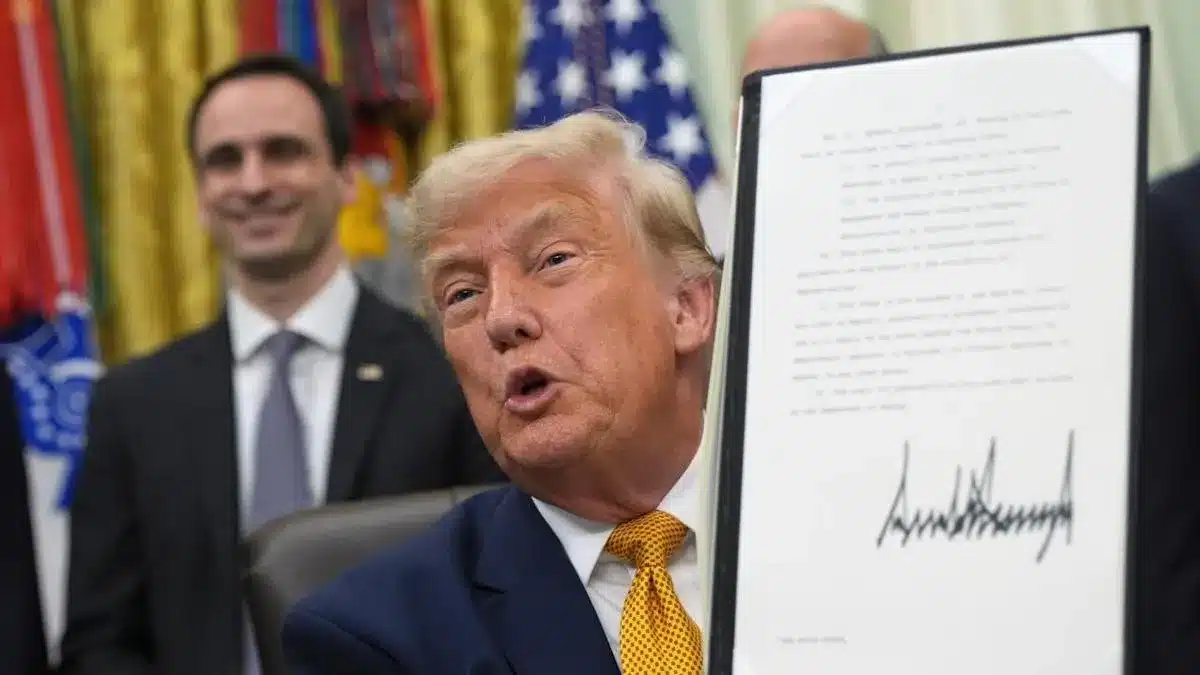
President Donald Trump has initiated a significant push to develop a powerful quantum computer, aiming to bolster scientific research and fortify government systems against emerging cyber threats. This move intensifies the United States’ technological competition with China in a field poised to revolutionize science and cybersecurity.
Key Timelines and Objectives
Officials anticipate the realization of a functional quantum computer by 2028. In conjunction with this, President Trump signed two executive orders. One order mandates the migration of critical government computing systems to post-quantum cryptography by 2030 or 2031, a crucial step to safeguard against potential cyberattacks powered by quantum computing. These advanced computers leverage quantum physics principles to process information, enabling the rapid solution of complex problems that currently challenge even the most powerful supercomputers.
Cybersecurity Implications and Strategic Importance
The development of quantum computers raises significant cybersecurity concerns, as they possess the potential to break current encryption methods, thereby increasing the risk of sophisticated cyberattacks. The executive orders underscore the administration’s commitment to maintaining US leadership in the quantum race, a technology that promises breakthroughs in artificial intelligence, materials science, and chemistry, while simultaneously addressing the associated cybersecurity vulnerabilities.
Quantum Sensing and International Cooperation
Beyond computing, the orders also direct the Pentagon to deploy quantum sensors by 2028. These sensors offer critical applications, such as enabling aircraft navigation in GPS-denied war zones and, when integrated into satellites, facilitating the detection of underground structures like tunnels or missile silos from space.
Matthew Kinsella, CEO of Infleqtion, who was present at the signing, remarked on the near-term potential of quantum sensing, stating, “There’s lots of interesting things quantum sensing can bring before quantum computing. It’s possible to meet these types of timelines.”
Furthermore, one of the executive orders emphasizes strengthening international collaboration on intellectual property protection and supply chain security. This initiative is particularly relevant given the efforts by adversaries to undermine US economic and national security. Another directive within the package requires agencies to develop plans for deploying quantum-enabled sensors and networks within the next five years.
Recent Investments in the Quantum Sector
This strategic initiative follows recent developments, including a $US2 billion investment by the Commerce Department in nine quantum computing companies, including a new venture by IBM.
