

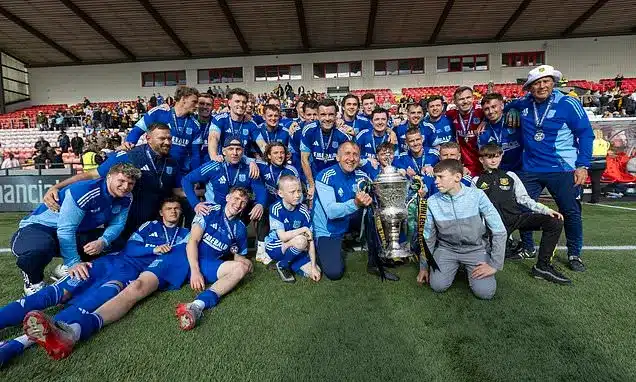
The roar of the crowd at Broadwood yesterday underscored the enduring passion for Scotland’s Junior football, a realm where triumph and heartbreak intertwine. In a dramatic conclusion to the 3 Pillars Financial Planning Scottish Communities Cup, Auchinleck Talbot secured their record 15th title, overcoming Largs Thistle with two late goals.
A Battle of Heart and History
Largs Thistle, the underdogs, initially seized the momentum, taking a sixth-minute lead. However, the seasoned Auchinleck Talbot, a club steeped in tradition, demonstrated why they are a dominant force in this competition. The Scottish Junior Cup, a symbol of over 140 years of footballing heritage, remains a coveted prize, its significance deeply embedded in the communities it represents.
The Ayrshire club’s 15th victory places them ten titles ahead of any other contender, a testament to their sustained success. For manager Tommy ‘Tucker’ Sloan, this marked his tenth winning medal in the competition, a remarkable achievement built over years as both a player and coach.
Supporters describe the cup as the ‘Holy Grail in the village,’ highlighting its profound connection to the local identity. For many, attending Talbot games evokes cherished memories, a sentiment echoed by Claire Leitch, Provost of East Ayrshire and a lifelong Talbot supporter. “The one that brings everybody together is the Talbot,” she stated. “We all come together to support the Talbot. We are very proud of the team.” She recounted childhood memories of attending games with her grandfather, the simple joy of a Bovril in hand encapsulating the experience.
The Enduring Appeal of Junior Football
David Gorman, who has dedicated years to researching lower league football, views the Junior game as the ‘working man’s ballet.’ His passion stems from a deep-seated love for Scottish football, passed down from his Ayrshire parents. The history of the Scottish Junior Cup is rich, with its first contest dating back to 1886-87. Records show a peak of 412 clubs participating in the 1922-23 season, and a staggering attendance of 77,650 for the 1951 final at Hampden Park. Yesterday’s final saw an attendance of 3,461.
Gorman’s research points to the early 20th century as a period of significant growth, influenced by legislation requiring mine owners to contribute to employee welfare, leading to the formation of football teams. He also notes the impact of de-industrialisation on the decline of some larger Junior clubs in Glasgow.
From Local Roots to National Recognition
Auchinleck Talbot, formed in 1909, began their era of dominance in 1986. The club, along with rivals Largs Thistle, are transitioning to the Lowland League West next season. Despite these changes, the Scottish Junior Cup remains a cherished competition, with clubs expressing a desire to continue their participation.
Gordon Law, a former president of the Junior association, has witnessed 45 cup finals and emphasized the enduring enthusiasm for the competition, even as the wider football landscape shifts towards pyramid structures. “It means so much to people and there is no sign of that enthusiasm waning,” Law commented.
Bobby Macnamara, president of the Scottish Community Football Association, underscored the strong community foundations of the clubs in his association. He highlighted the personal commitment involved at this level, sharing an anecdote about being seen cleaning a dressing room despite his official role. “There are no airs and graces at this level,” Macnamara said, reflecting the authentic spirit of Junior football.
The prize money for the cup is substantial, second only to the SPFL, but for the clubs and their devoted fans, the true value lies in the history, community pride, and the sheer magic of the game.
