

Collaboration on Immigration Legislation
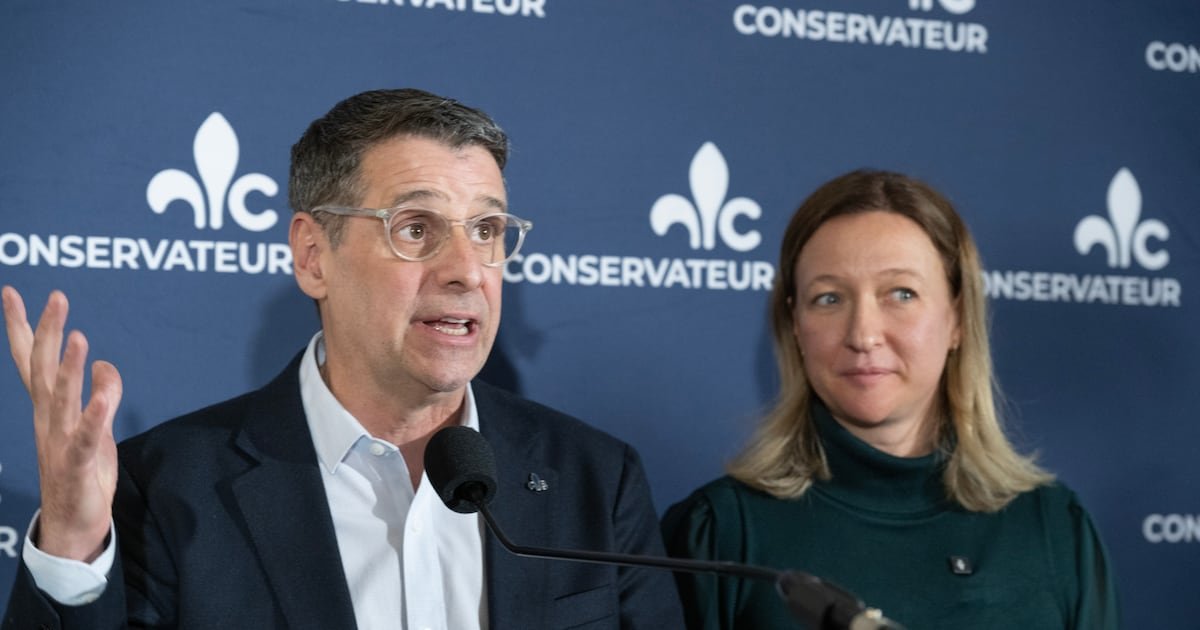
Quebec Conservative Party Leader Éric Duhaime and former Coalition Avenir Québec (CAQ) Member of the National Assembly (MNA) Maïté Blanchette Vézina have joined forces to co-sponsor a new bill aimed at reshaping immigration policies. The initiative emphasizes regionalizing immigration efforts across the province.
Blanchette Vézina, who has served as an independent MNA from Rimouski since September, appeared as a prominent guest at the party’s convention held over the weekend in Lac-Delage, near Québec City. The proposed bill seeks to decentralize immigration processes to regional areas, providing them with essential tools, including programs for French language integration, or francization.
Following her speech, Blanchette Vézina addressed reporters and brushed aside questions about her unclear political future. “There are steps to take in a reflection process,” she explained. Duhaime, standing nearby, expressed his vision for her involvement. “My goal is for Maïté to run under the Conservative Party banner in the next election,” he stated.
Encouraging Conservative Pride and Party Momentum
Stéphane Lachance, a Conservative Party member and opposition leader at Quebec City Hall, urged attendees to embrace their conservative identity without hesitation. “Hold your head high. The shame needs to switch sides. There is no shame in wanting common sense to finally return to our lives,” he told the approximately 300 participants.
Party momentum is building, according to Anne Casabonne, the former Conservative candidate in Iberville. “We’re climbing in the polls. We’re rising like crazy!” she declared, while criticizing rivals for adopting conservative policies. “Everyone is fighting on the right,” added Karim Elayoubi, chair of the party’s policy committee.
The convention plays a crucial role in developing the party’s platform for the upcoming provincial election set for fall 2026.
Economic Policy Resolutions Adopted
Delegates approved several economic measures on Saturday morning. They voted to eliminate the Economic Development Fund and restructure the Treasury Board into a Treasury and Government Efficiency Board. This new entity would conduct systematic reviews of all government expenditures and programs.
Further changes target Investissement Québec, aiming to eliminate political interference and align its operations more closely with the Business Development Bank of Canada to better support businesses.
Conservatives also endorsed scrapping the province’s carbon market and Green Fund, citing Quebec’s minimal contribution to global greenhouse gas emissions at just 0.14 percent. “The sums spent since 2014 have had no significant impact on emissions reductions,” according to the resolutions.
Louis Charbonneau, from the Laval-des-Rapides riding, highlighted that CO2 serves as an essential substance for plant growth rather than a pollutant.
Another adopted proposal permits ministries and agencies to retain up to 10 percent of unspent funds for the next fiscal year, aiming to curb wasteful end-of-year spending driven by a “use it or lose it” culture.
However, members turned down a suggestion to mandate regular “plain-language information capsules” on public finances, expressing concerns it might enable government misinformation.
Party Leadership Praises Progress
At a news conference, Duhaime commended the delegates for their growing sophistication. “I see them gaining maturity and becoming more professional,” he noted.
Polling Outlook and Past Performance
Recent polling data from Qc125 indicates the Conservative Party holds about 16 percent support, potentially securing at least eight seats in the next election. A fresh Léger–Le Journal–TVA survey places them at 14 percent, ranking fourth behind the Parti Québécois, Quebec Liberal Party, and Coalition Avenir Québec.
In the 2022 provincial election, the party garnered over 530,000 votes but did not secure any seats in the National Assembly.
