

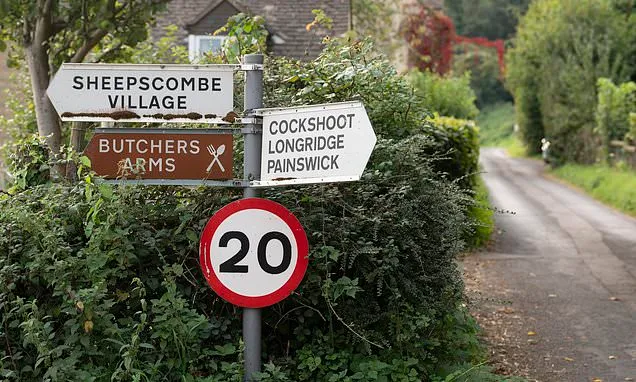
Government guidance has been issued suggesting that speed limits on rural roads within towns and villages across England should be reduced to 20mph. The recommendations, detailed in a new Rural Design Guide by Active Travel England, aim to enhance safety for cyclists and other vulnerable road users by encouraging slower traffic speeds in shared spaces.
Key Recommendations for Rural Road Safety
Active Travel England, an agency operating under the Department for Transport, has put forth a series of measures designed to lower vehicle speeds in rural settlements and on country lanes where pedestrians, cyclists, and motorists often share the road. The guidance explicitly states that ‘traffic speed should be no more than around 20mph’ in these areas. While local authorities are not legally bound to implement these suggestions, the 253-page document presents them as ‘best practice’ for promoting active travel.
Beyond speed limit reductions, the guidance proposes several other traffic calming measures. These include:
- Narrowing Roads: Councils are encouraged to consider making roads narrower, potentially by creating dedicated footways.
- Removing Centre Lines: Eliminating the white line that separates opposing lanes of traffic can psychologically encourage drivers to slow down.
- Installing Bollards and Islands: Physical features like bollards or traffic islands can physically constrict road space and deter higher speeds.
- Textured Road Surfaces: Introducing textured strips in the middle of the road can alert drivers to their speed.
These measures are intended to make rural roads less attractive for high-speed driving, thereby reducing the risk of accidents involving more vulnerable road users.
Context and Existing 20mph Limits
The push for lower speed limits in rural areas comes as a significant portion of Britain’s road network already operates under 20mph restrictions. According to transport consultancy Insight Warehouse, over one-sixth of all roads in Britain, totaling approximately 39,000 miles out of a national network of 246,500 miles, currently have a 20mph speed limit. This includes widespread adoption in urban areas, with over half of London’s roads adhering to this limit, and a significant default reduction in Wales, where the default limit on most residential roads was lowered from 30mph to 20mph in 2023.
In England, the implementation of 20mph limits on rural roads has been more localized. Counties such as Surrey and Oxfordshire have already seen some of their country roads reduced from the national speed limit of 60mph to 20mph.
Addressing Rural Road Safety Concerns
The guidance highlights the importance of addressing safety on rural roads, noting that approximately 17 percent of England’s population, around 10 million people, reside in rural areas. Crucially, the document points out that nearly two-thirds of road deaths recorded in Great Britain in 2024 occurred on rural roads. This statistic underscores the urgency and potential impact of the proposed safety measures.
Active Travel England suggests that a ‘whole-settlement 20mph limit’ could be more cost-effective and less confusing for drivers than implementing isolated restrictions. The aim is to create a consistent environment where lower speeds are the norm, encouraging a shift in driver behavior.
Potential Impact and Criticisms
The proposed measures aim to foster a safer environment for walking and cycling, aligning with a broader government commitment to increase active travel. The government has pledged to invest £4.5 billion in active travel initiatives, with the goal of making 55 percent of all short journeys walked or cycled by 2035.
However, the guidance has also drawn criticism. Richard Holden, identified as the shadow transport secretary, expressed concern that the recommendations represent an attempt to introduce 20mph limits on rural roads indirectly. He argued that similar limits imposed in Wales have been problematic for rural communities and are already being reversed due to their negative impact on residents who rely on shared road spaces.
Conversely, Lilian Greenwood, the local transport minister, defended the guidance, stating that it provides practical advice to local authorities to create safe and accessible walking and cycling routes. She emphasized that these improvements would connect residents of smaller communities and promote healthier lifestyles.
Driver Behavior and Speeding Data
While evidence suggests that 20mph limits can reduce average vehicle speeds, concerns persist among some motorists about their appropriateness on certain roads. Data from Insight Warehouse indicates a high number of speeding offenses on lower-speed roads. In England, Wales, and Scotland last year, nearly a million drivers received an SP30 endorsement for exceeding the speed limit on roads other than motorways. This contrasts with a six percent decrease in motorway speeding offenses over the same period.
The increase in drivers attending speed awareness courses, which reached a record 1.8 million last year, may also be linked to the proliferation of lower speed limits. Drivers can opt for these courses to avoid penalty points and fines. Furthermore, police forces issued significantly more tickets for speeding on 20mph roads, with a two-thirds increase observed in the year leading up to 2024. The Department for Transport noted that a substantial proportion of drivers exceed the speed limit on ‘free-flowing’ 20mph roads, where the absence of traffic calming measures or cameras can lead to average speeds of around 24mph, still sufficient to trigger speed cameras.
Conclusion
The new guidance from Active Travel England represents a significant step in the ongoing discussion about road safety in rural England. By suggesting a widespread adoption of 20mph speed limits and complementary traffic calming measures, the aim is to create safer environments for cyclists and pedestrians. While the guidance offers a framework for best practice, its implementation will ultimately depend on the decisions of individual local authorities, balancing the potential safety benefits against concerns raised by some road users.
