

A Nation’s Enduring Hope on the World Stage
For 72 years, the start of a World Cup has been met with unwavering optimism by Scotland’s passionate supporters. This hope, however, has consistently waned, often replaced by disappointment before the unfamiliar sights and sounds of host nations could truly be embraced. The journey began in 1954 in Switzerland, where players endured sweltering conditions in attire ill-suited for the heat. Following a narrow loss to Austria, manager Andy Beattie departed, and the team’s dignity was further eroded by a resounding 7-0 defeat to Uruguay. While such a comprehensive collapse hasn’t been replicated, reaching the knockout stages of the World Cup has remained an elusive dream.
Across seven subsequent campaigns, from Sweden in 1958 to France in 1998, moments of promise flickered. Those who believed these instances signaled a turning point were later to lament their wishful thinking. Throughout their World Cup history, Scotland has experienced both outright failure and what might be termed ‘glorious failure,’ yet the ultimate outcome has consistently been the same: an early exit.
A Glimmer of Possibility in Boston
The prospect of a different outcome this time around might seem daunting, yet the enduring belief persists. It is this unwavering faith that fuels the Tartan Army, the conviction that after years of struggle, this could finally be their moment. The possibility of shattering expectations is closer than many dared to imagine. If current projections hold true, a historic achievement could be within reach in the early hours of tomorrow morning at the Boston Stadium.
Manager Steve Clarke’s squad needs to secure a clean sheet against Morocco to reach four points, a tally that would significantly enhance their chances of qualification, even with a challenging match against Brazil still to come. Facing a team ranked sixth globally and a semifinalist in the recent Qatar World Cup presents a formidable challenge. Nevertheless, it is by no means an insurmountable one.
Navigating Past Obstacles
While the opening match against Haiti appeared winnable on paper, Scotland’s historical struggles against seemingly lesser opponents—recalling past encounters with Peru, Iran, and Costa Rica—made it a more perilous fixture than anticipated. This context likely explains why an underwhelming performance against Haiti was met with less criticism, as the result was paramount.
Morocco, having secured a draw against Brazil in their opening fixture, represents a substantial step up in class. However, Scottish supporters present in Boston are justified in harboring cautious optimism. Over the seven years under Clarke’s management, the team has demonstrated a commendable ability to rise to the occasion and achieve unexpected results. The victory over Spain three years ago stands as a prime example, alongside a hard-fought draw against England at Wembley. Furthermore, encouraging performances against nations of similar standing, including multiple wins against Denmark, a dramatic victory in Norway, and a memorable night in Belgrade, highlight the team’s potential.
Assessing the Squad and Tactical Considerations
To achieve a positive result against the champions of Africa would be the pinnacle of these achievements. Morocco presents a serious threat, boasting star players such as Achraf Hakimi of Paris Saint-Germain and Brahim Diaz of Real Madrid, supported by a strong contingent including Ayyoub Bouaddi, Ismael Saibari, Bilal El Khannouss, and Noussair Mazraoui. Given their semifinal appearance in Qatar, where they overcame Belgium, Spain, and Portugal, it would be inaccurate to label them as mere outsiders for the tournament. They possess the pedigree to win and will likely expect to defeat Scotland.
For Scotland to stand a chance, Clarke acknowledges that the team’s collective performance must significantly improve from the match against Haiti. This is a reasonable expectation. Key players like Scott McTominay, vital to the team’s dynamics, appeared below par in the initial game, potentially due to a missed training session. Napoli’s McTominay is expected to be fully recovered. Aaron Hickey and Che Adams also faced challenges in the previous outing. John McGinn, while scoring Scotland’s first tournament goal in 28 years, needs to improve his ball retention. Angus Gunn is set to start in goal, with Hickey, Grant Hanley, Jack Hendry, and Andy Robertson forming the defensive line. A two-striker system, as seen against Haiti, is less likely. Che Adams, despite being substituted, is a marginal favorite to start ahead of Lawrence Shankland. Lyndon Dykes is expected to play a crucial role, whether tasked with pressing the Moroccan defense early on or providing an aerial outlet later in the game.
Midfield and Defensive Options
The manager has likely focused on the midfield configuration. Kieran Tierney, who did not feature in the first game, could be introduced into a back-five, playing on the left to bolster defensive numbers. This would necessitate a midfield four, with Lewis Ferguson and either Kenny McLean or Ryan Christie supporting McGinn and McTominay. This tactical approach is a strong possibility.
Alternatively, maintaining a flat back-four, with Tierney potentially remaining on the sidelines, would allow for a five-man midfield. Ferguson, McGinn, and McTominay would be near certainties, with Christie and Ben Gannon-Doak likely occupying the wide midfield roles. The effectiveness of substitutions will be critical to the outcome. Findlay Curtis and Nathan Patterson are anticipated to feature for at least half an hour. Tyler Fletcher, who impressed after being called up for training, might make his debut.
Home Advantage and Historical Context
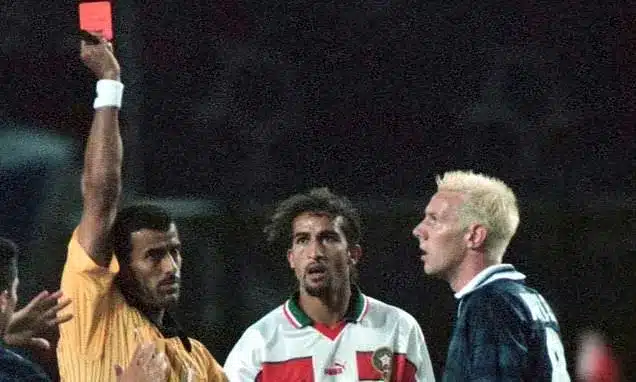
Scotland may benefit from a degree of familiarity with their surroundings. The Boston Stadium, located in Foxborough, presented a unique atmosphere last weekend, and the Moroccan team, whose first match was in New Jersey, will need to adapt. The historical encounters between the two nations are limited, with the most recent being a forgettable clash in 1998. That match saw Craig Burley sent off, Morocco secure a 3-0 victory, and Scotland make their customary early departure from the tournament.
This current opportunity feels like a long time in the making and possesses the potential to fundamentally alter Scotland’s World Cup narrative.
