

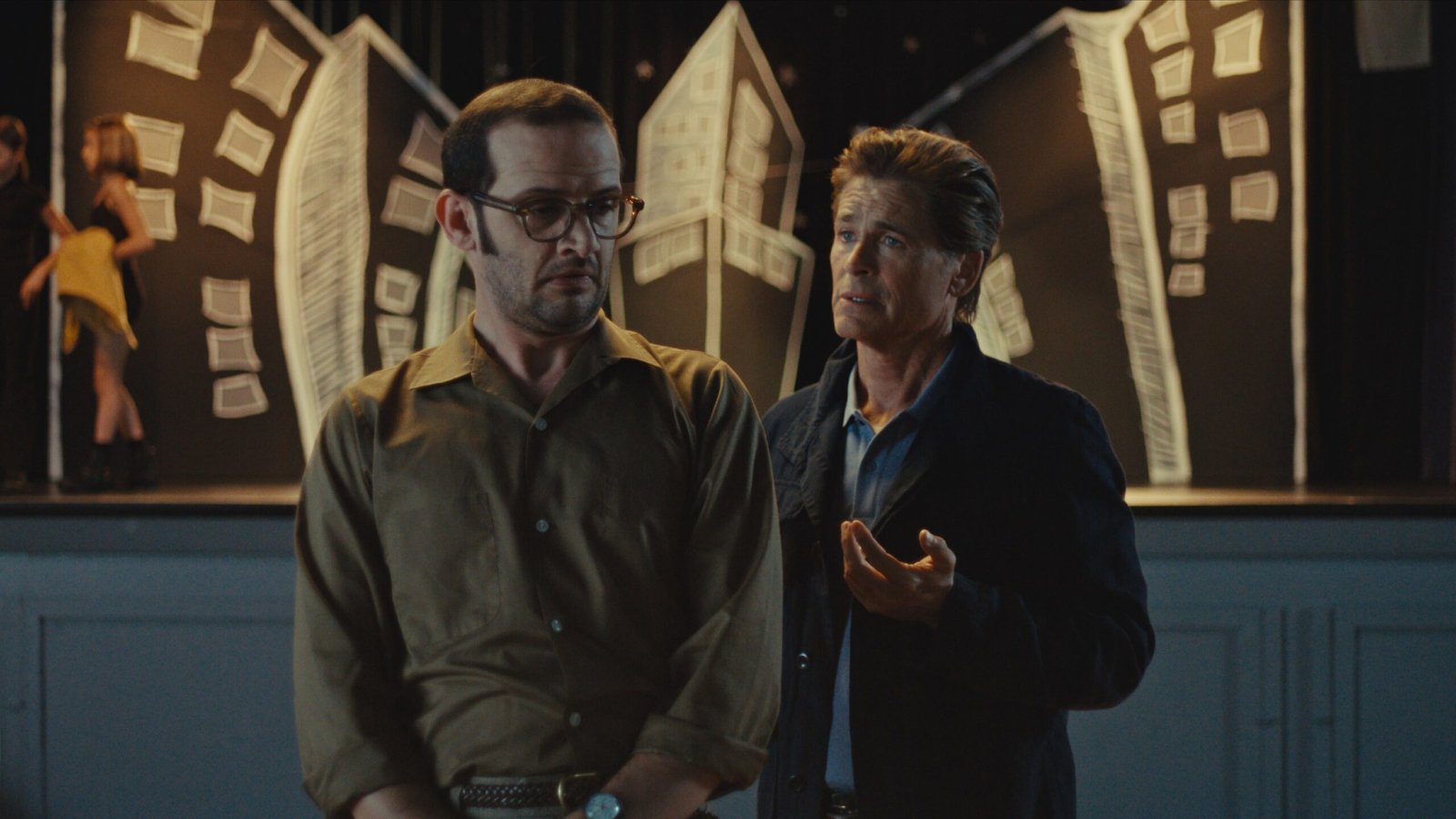
In the high-stakes world of middle school performing arts, resentment can be a more powerful motivator than passion. This is the central thesis of The Musical, a biting new dark comedy directed by Giselle Bonilla. The film explores the destructive nature of professional and personal jealousy, following a disgruntled educator who decides to burn his career down just to take his enemies with him.
A Plot Fueled by Professional Sabotage
The story centers on Doug (played by Will Brill), a disillusioned drama teacher at a suburban middle school. Doug is a man defined by his failures; a former aspiring playwright who has been forced to settle for teaching prepubescent teens. His bitterness reaches a breaking point when he discovers that his ex-girlfriend and colleague, Abigail (Gillian Jacobs), has begun a relationship with their superior, Principal Brady (Rob Lowe).
Rather than seeking a quiet exit or professional mediation, Doug chooses a path of calculated chaos. Under the guise of rehearsing a standard production of West Side Story, he secretly manipulates his students into preparing a controversial, original musical about the events of September 11th. His goal is simple: to stage a production so offensive and shocking that it results in the immediate termination of the principal who authorized the drama program.
Performances and Character Dynamics
Will Brill delivers a performance rooted in “white male bitterness,” portraying Doug as a man who views himself as the tragic lead of a noir film. His self-pitying narration and the film’s jazzy, brass-heavy score emphasize his internal delusion. Opposite him, Rob Lowe plays Principal Brady with an unctuous, “punchable” charm—a man more concerned with maintaining his public image and appeasing parents with a giant Stanley mug in hand than with the actual education of his students.
Gillian Jacobs provides a grounded contrast as Abigail, who appears less like a femme fatale and more like a rational professional who simply grew tired of Doug’s escalating cynicism. The tragedy of the film lies in the fact that the students are caught in the crossfire, being used as pawns in a petty adult feud.
Satire That Borders on the Absurd
The film’s centerpiece is the secret musical itself, titled Heroes. While the concept of a 9/11 musical performed by middle schoolers feels intentionally dated and provocative, the execution provides the film’s most hilarious moments. Seeing children dressed as political figures like Rudy Giuliani, singing about reputation and salvation, highlights the absurdity of Doug’s desperation.
Director Giselle Bonilla maintains a tricky tonal balance throughout her debut feature. While the script by Alexander Heller leans heavily into bile and spite, the film finds success in its formal creativity. From Doug brainwashing his students with classic cinema to the “too soon” energy of the stage production, the movie captures a specific brand of suburban anarchy.
A Study in the Power of Spite
Ultimately, The Musical is an exploration of how entitlement can morph into a destructive force. Doug doesn’t necessarily want to win Abigail back; he simply wants to ensure that his enemies lose as much as he feels he has. As the protagonist notes in one of his cynical monologues, everyone discusses the power of love, but the power of spite is often the true engine of human behavior.
While the film’s nihilistic streak may be polarizing, it offers a sharp, satirical look at the modern education system and the fragile egos of those within it. The Musical is currently seeking distribution following its recent festival premiere.
