

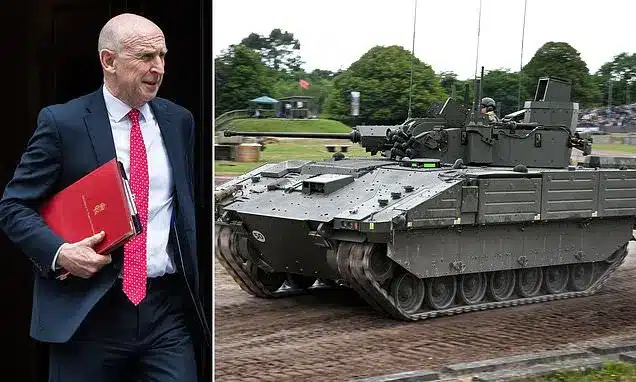
Delays in revealing a crucial defence spending plan have significantly damaged the United Kingdom’s standing with its international allies, a parliamentary committee has concluded. The public accounts committee, tasked with overseeing government expenditure, also raised serious concerns about a £6.3 billion tank program, suggesting the resulting military hardware may ultimately prove unusable.
Defence Plan Delays Erode Credibility
The report criticizes the Ministry of Defence (MoD) for its inability to act with promptness and certainty in developing a robust deterrent for modern warfare. A key document, intended to detail funding for new equipment and defence infrastructure over the next decade, was originally slated for release last autumn but has faced repeated postponements. Prime Minister Sir Keir Starmer has indicated the plan will be published before a NATO summit on July 7.
However, Sir Geoffrey Clifton-Brown, the committee’s chairman, stated that the damage to the nation’s credibility and its armed forces has already occurred, regardless of the eventual content of the plan. He urged ministers to acknowledge the negative message sent to the public, allies, and adversaries by the prolonged bureaucratic delays and to offer an apology.
The committee also highlighted that the delay undermines public confidence in increased defence spending, as the government has failed to demonstrate value for taxpayer money. Defence Secretary John Healey has asserted that Sir Keir is committed to publishing the plan, but Sir Geoffrey noted that the nation has been without a credible military capability strategy for years.
Rising Costs and Uncertain Future
The report further indicates that defense contractors are increasing prices amidst global instability, potentially leading to higher government costs if decisions continue to be postponed. Sir Keir has pledged a boost in defense spending, despite suggestions that the current plan might be reduced by £3 billion from its projected £18 billion due to concerns about public finances and the economic impact of international conflicts.
An MoD spokesperson countered these concerns, stating that since the current government took office, over 1,400 major defence contracts have been signed. They emphasized a commitment to a generational increase in defence spending to prevent a return to the depleted state of the armed forces seen in the past.
Ajax Tank Program Faces Scrutiny
The committee’s report also called for clarity from the MoD on how its Ajax tanks will be made fit for purpose, citing unrealistic expectations placed on soldiers for their safe operation. In November of last year, a training exercise involving the tanks was halted after 33 soldiers experienced health issues attributed to noise and vibration. Some soldiers remained under medical review months later.
The report revealed that soldiers are now required to conduct maintenance checks every time the tanks are stopped to mitigate these issues. Sir Geoffrey described this measure as an affront to common sense, and the report deemed the MoD’s expectation unreasonable, especially considering the extended periods soldiers would operate the tanks during combat.
While the ministry has indicated plans for an upgrade package, the committee expressed skepticism, stating they would await the outcome with more hope than expectation. Sir Geoffrey expressed sympathy for the soldiers affected and astonishment at the proposed maintenance protocols.
Safety Concerns and Cost Overruns
The Ajax tank program, initially expected to be operational by 2017, has been plagued by delays due to soldier safety concerns. Following a recent exercise that had to be stopped due to soldiers falling ill from noise and vibration, approximately 310 soldiers required hearing assessments, with 17 treated for hearing loss.
An official investigation into the incident identified a combination of factors, including loose engine bolts, track issues, and potential carbon monoxide leaks. Faulty equipment, inconsistent training, and exposure to cold temperatures were also cited as contributing factors.
The committee criticized the MoD’s expectations, stating that armored vehicles causing injury outside strict operational parameters would be of little use on the modern battlefield. There is a risk that the department may need to spend even more than planned on potential “Ajax 2” improvements to salvage the program.
The MoD, however, maintains that there are no safety concerns with Ajax when operated and maintained correctly within its design parameters.
