

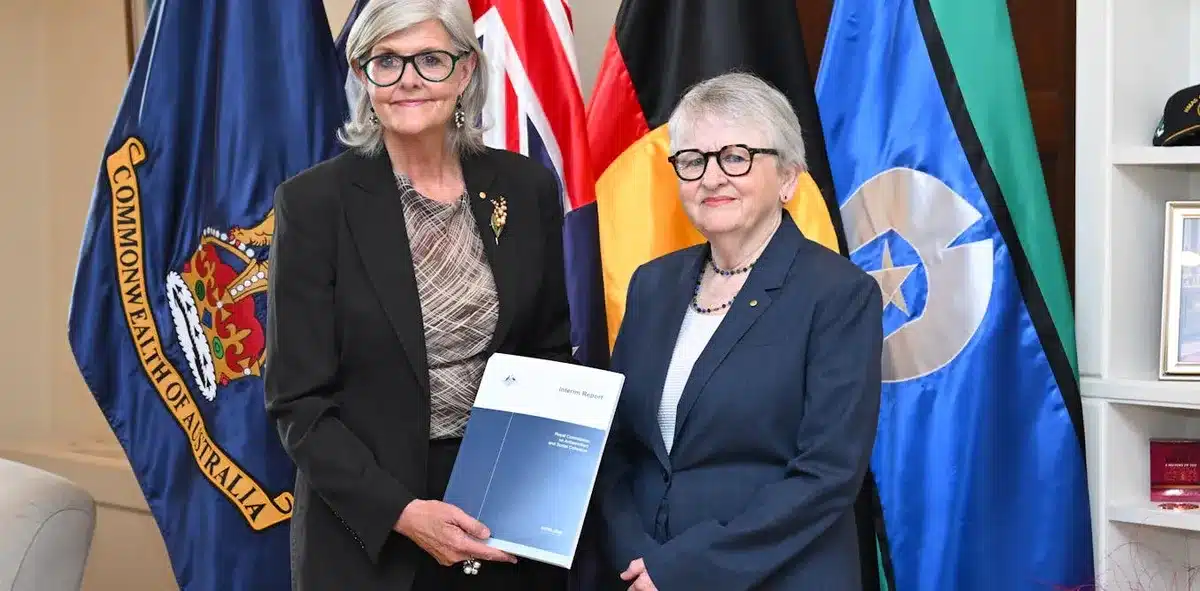
Justice Virginia Bell has delivered her interim findings from the Royal Commission into Antisemitism and Social Cohesion to the governor-general. Prime Minister Anthony Albanese quickly pledged full implementation of all recommendations. The report urges targeted updates to counter-terrorism policies and swift completion of the delayed national gun buyback program. While these measures offer potential benefits, they fail to address fundamental issues surrounding the scale of the Bondi terror attack in Australia.
The commission has yet to explore root causes that may have enabled the incident or outline comprehensive actions required from governments, agencies, and society to avert future tragedies.
Key Recommendations in the Interim Report
The interim report outlines 14 recommendations, with five remaining confidential. The nine public ones primarily target counter-terrorism policies and agency operations. Recommendations three to six emphasize integrating the Australia-New Zealand Counter-Terrorism Committee—a senior government coordination group—into the Australian government’s Crisis Management Framework. This committee must also brief National Cabinet at least once a year.
Recommendation seven requires National Security Committee ministers to join a counter-terrorism exercise within nine months of each federal election. Such adjustments aim to enhance coordination but cannot prevent determined terrorists from acting. Many Australians remain unfamiliar with these bodies.
An initial departmental inquiry, led by former ASIO head Dennis Richardson and announced by Albanese, could have addressed these matters more rapidly. Richardson recently stepped down, describing his role as that of an overpaid research officer and expressing concerns over delays in delivering actionable advice on policing and intelligence. His 2019 review of Australia’s intelligence framework informs several findings here, making the report feel like an extension of prior assessments rather than a fresh probe into the Bondi incident.
Next Phases of the Inquiry
Public hearings commence next week, starting with testimony from individuals affected by antisemitism. The commission’s broad mandate spans antisemitism, social cohesion, law enforcement training, border controls, immigration, radicalization, attack specifics, and related matters. It has gathered over 3,500 submissions and faces a December 14 deadline for the final report, just before the attack’s anniversary.
Meeting this timeline across such vast topics presents a significant challenge, potentially requiring prioritization amid debates on core focus areas. Justice Bell acknowledges the scope, stating that “examining the ways in which we might strengthen social cohesion in Australia could well be the work of years, not months.”
Currently, the interim report provides Australians with scant insight into the Bondi terror attack and its prevention.
