

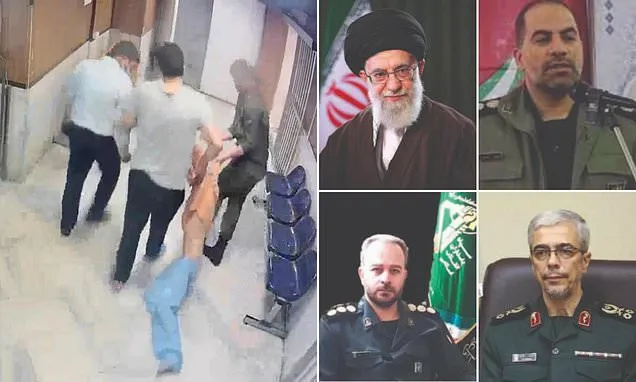
Amnesty International has identified 87 Iranian officials who allegedly oversaw a brutal crackdown on the 2022 ‘Woman, Life, Freedom’ protests, a campaign marked by killings, torture, and sexual violence. The human rights organization’s extensive report calls for these individuals to be investigated for crimes against humanity, based on testimonies from 270 witnesses and survivors, alongside a thorough review of over 2,000 videos recorded during the period of unrest.
Comprehensive Investigation into Protest Crackdown
The investigation, detailed in a substantial report, meticulously examined audiovisual evidence and survivor accounts to reconstruct the events of the 2022 protests. Amnesty International found that the Islamic Revolutionary Guards Corps (IRGC) and the Police Command of the Islamic Republic of Iran (FARAJA) were central to the operations aimed at dispersing demonstrators. Official communications and leaked documents indicated directives for a severe and uncompromising response. One directive reportedly instructed security forces to “respond mercilessly and go as far as causing death.”
Use of Lethal Force and Physical Abuse
Security forces are alleged to have repeatedly used lethal force against crowds, employing military-grade assault rifles, handguns, and shotguns loaded with metal pellets. Reports indicate that security forces pursued fleeing protesters and bystanders, engaging unarmed individuals at close range. Survivors described harrowing scenes, with one individual from Mahabad stating, “I had never seen such scenes before… The situation was very frightening and felt like a war zone. The security forces just kept shooting.” Another protester from Sanandaj recounted, “The agents would shoot anyone in their sight, not caring if they were women, children, passersby or protesters… Many people were injured by metal pellets striking their legs, bodies, chests and faces.”
Beyond gunfire, security forces allegedly employed batons, electric shock devices, kinetic impact projectiles, and tear gas. Protesters endured severe physical violence, including kicking, punching, dragging, being thrown to the ground, being stamped on, and having their hair pulled. Many sustained fatal injuries, with some victims allegedly denied medical treatment, leading to death. Survivors were left with significant physical trauma, including permanent vision loss, head and facial injuries, fractures, and internal damage. Long-term health complications such as chronic pain, mobility issues, and recurring infections were also documented.
Torture and Ill-Treatment in Custody
Amnesty International also documented extensive instances of torture and ill-treatment of individuals held in state custody. These abuses were reportedly used to intimidate, punish, humiliate detainees, and extract forced confessions. Methods included severe beatings with various implements, slapping, kicking, flogging, hair pulling, and electric shocks. Detainees also faced prolonged solitary confinement, extreme temperatures, forced administration of chemicals, and painful stress positions. Reports also detailed denial of essential care, including food, water, and medical attention. Some detainees described being subjected to mock executions, submersion under water, and having needles inserted into sensitive areas.
Psychological torture was also prevalent, with reports of threats of further torture, killing, or life imprisonment. Detainees were allegedly exposed to sustained light or sound, forced into humiliating acts, subjected to degrading insults, and made to listen to the suffering of other detainees. Prison conditions were described as cruel and inhuman, characterized by overcrowding, unsanitary environments, infestations, inadequate accommodation, and minimal access to basic facilities.
Sexual Violence and Abuse
The report highlights disturbing accounts of sexual violence and rape against detainees. Amnesty documented 16 cases of rape in connection with the uprising, affecting women, men, a young girl, and teenage boys. In several instances, individuals were subjected to forced sexual penetration by multiple officials. The methods of sexual abuse involved various objects and the sexual organs of security agents. Additionally, 29 other individuals reportedly experienced forms of sexual violence short of rape, including groping and physical abuse of intimate areas. Women and girls were allegedly stripped naked in front of male detainees and held in freezing conditions for extended periods. Threats of rape, including against female relatives, were also reported.
Men and boys also faced threats of rape, forced undressing, and exposure to cold. Some reported electric shocks to their genitals, insertion of needles, and physical abuse of their testicles or buttocks. Security forces reportedly used gendered insults and vulgar language, suggesting detained women deserved such treatment for protesting compulsory veiling.
Abuses Against Families of Victims
Family members of those killed during the protests faced a range of human rights violations. They were allegedly pressured to accept false narratives about their loved ones’ deaths and coerced into complying with restrictions on funerals and memorial services. Authorities reportedly denied families access to autopsy reports, restricted viewing and photographing of bodies, and failed to issue accurate death certificates. Key evidence, such as CCTV footage, was allegedly concealed. Families were also denied justice through rushed official statements, pressure to drop complaints, and premature termination of investigations.
Officials Named and Call for Accountability
The list of 87 officials includes 62 security force commanders and 25 Ministry of Interior officials. Among those named are high-ranking figures, including the Supreme Leader and the head of the General Staff of the Armed Forces, as well as the former interior minister and deputy interior minister. Amnesty International’s Secretary General, Agnes Callamard, stated that the investigation exposes the command structure behind the crackdown, linking street-level agents to officials who directed, enabled, and supported widespread crimes. Callamard emphasized the ongoing impunity for these officials within Iran and called for an international criminal justice mechanism to ensure accountability before further violence occurs.
The report asserts that the named officials remain beyond the reach of justice in Iran, with some continuing in positions of power or even advancing in their careers. Amnesty International argues that the cost of this impunity is devastating and urges the establishment of an international mechanism to address the alleged crimes against humanity.
