

Queensland is set to intensify its focus on international football, with the state’s tourism minister vowing to pursue more major events in the sport. This renewed commitment follows the announcement of Brazilian-themed street parties coinciding with the Socceroos’ upcoming friendly matches against Brazil.
Queensland’s Renewed Push for Football
Tourism Minister Andrew Powell stated that Queensland has missed opportunities by not actively seeking more football fixtures in the past. While Brisbane has hosted exhibition matches, the city has not seen a competitive international game since the 2015 Asian Cup quarter-final. This absence spans three FIFA World Cup cycles (2018, 2022, and the upcoming 2026 North America tournament), during which no World Cup qualifiers were held in the state capital.
“It goes to show that we’ve missed an opportunity for at least the last decade around football in this state,” Powell remarked. “We’re great with league, we’re great with AFL, we’re doing a good job with union. Football is a space where we can move into and take to another level. This [Brazil] game is just the start.”
The upcoming friendlies against Brazil are seen as a pivotal moment for Queensland to elevate its standing in the global football landscape. Powell expressed an unapologetic ambition for the state to become Australia’s premier events destination, highlighting football’s capacity to draw significant crowds from both domestic and international sources.
High-Profile Matches and Fan Engagement
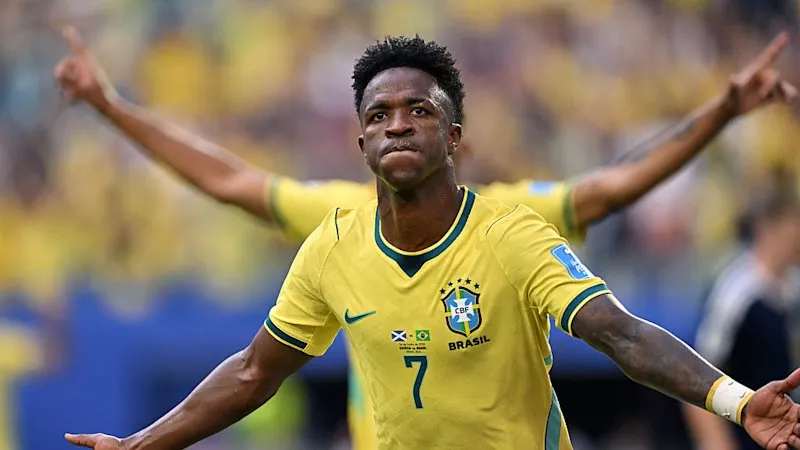
The Socceroos will face a formidable Brazilian squad, with coach Carlo Ancelotti naming prominent stars such as Vinicius Junior of Real Madrid, Raphinha from Barcelona, and Bruno Guimaraes of Arsenal. The two-match series is scheduled to take place in September, with the first game on September 25 in Townsville and the second on September 29 in Brisbane.
To enhance the fan experience and capitalize on the international attention, Queensland is organizing vibrant street parties. In Brisbane, Caxton Street will be closed to traffic on the evening of September 29, starting at 5:30 PM, to host a Brazilian-style celebration. This event aims to extend the excitement beyond Suncorp Stadium, fostering a festive atmosphere throughout the city.
“It’s not just about what happens in the stadium; it’s about what happens in the city around us, whether that be here in Brisbane or up in Townsville,” Powell explained. “Full hotels, full cafes, full restaurants, and the party spilling out onto the streets.”
Similarly, Townsville will host a pre-match street party on Flinders Street, featuring a concert by Sneaky Sound System, ahead of the game at Queensland Country Bank Stadium. Townsville MP Adam Baillie emphasized the global spotlight on the city, positioning it as the “sporting and events capital of the north” and anticipating substantial benefits for local accommodation, tourism, and hospitality sectors.
Community and Historical Context
The matches are expected to draw significant interest from Queensland’s Brazilian community, estimated at over 20,000 people, with many more anticipated to travel from across Australia and even South America. Valeria Noleto, Chief Executive of the Australia-Brazil Chamber of Commerce, shared a personal connection to the sport, recalling cherished memories of watching football with her father and expressing pride in the opportunity to create similar experiences for the next generation.
Noleto predicted a close contest, forecasting a 3-2 victory for Brazil, while also expressing a desire for a draw as an Australian citizen. Socceroos coach Tony Popovic was slated to announce his squad on the Friday preceding the matches.
These encounters mark the first time Brazil’s senior national team will play in Queensland. While the senior team has not previously featured in the state, Brazil’s under-23 Olympic side competed at The Gabba during the Sydney 2000 Games. Notably, Brazil’s senior team last visited Australia in 2017, playing in front of a massive crowd at the Melbourne Cricket Ground against Argentina and later defeating the Socceroos.
Future Prospects for Queensland Football
Minister Powell’s commitment signals a strategic shift towards prioritizing football, aiming to secure future high-stakes matches, including crucial World Cup qualifiers. The success of these friendlies and associated events is expected to bolster Queensland’s reputation as a premier destination for major sporting events, potentially attracting further international competitions and significant economic benefits.
The state’s ambition to become the events capital of Australia is underpinned by the understanding that major sporting fixtures like these generate substantial economic activity, from accommodation and dining to local employment. By actively cultivating relationships and demonstrating capability in hosting world-class events, Queensland aims to secure a more prominent role in the international football calendar.
