

Michigan Democrats Propose Border Ban on Chinese Electric Vehicles
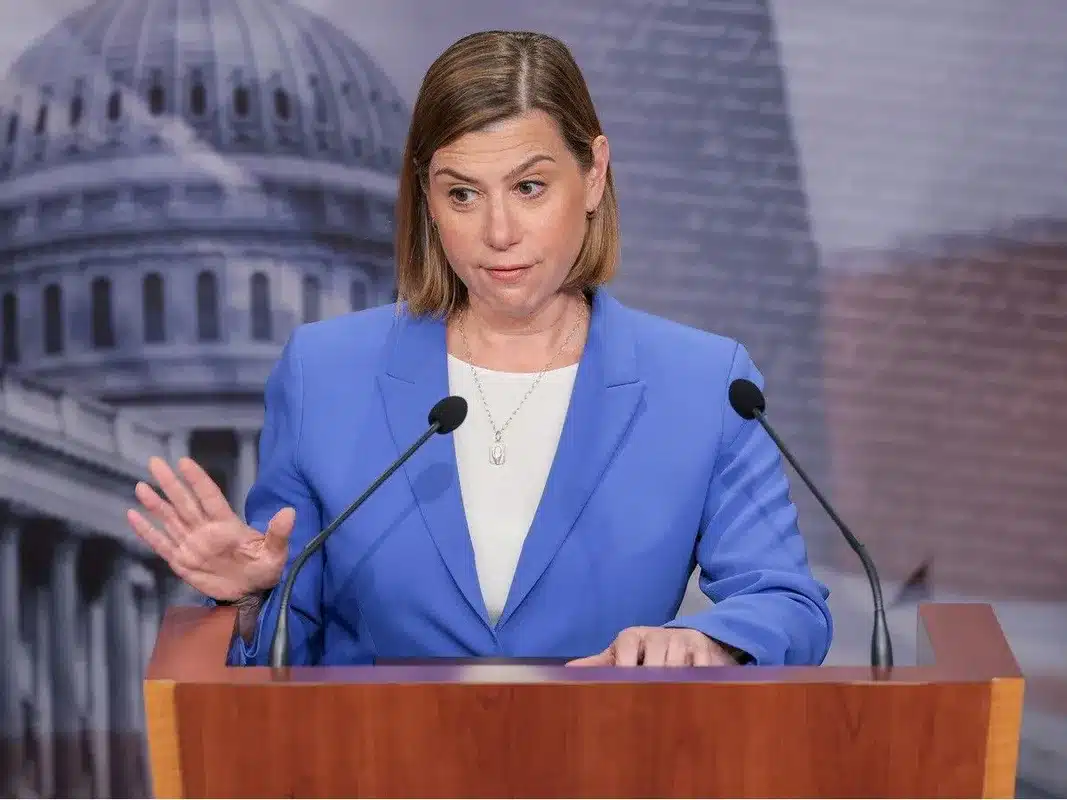
Michigan Democrats are spearheading a legislative effort to prevent Chinese-made electric vehicles (EVs) from entering the United States via Canada and Mexico. The proposed “Protecting America from Chinese Cars Act,” introduced by Senator Elissa Slotkin and Congresswoman Haley Stevens, aims to block connected vehicles manufactured in China from crossing the U.S. border.
Security Concerns and ‘Surveillance Packages on Wheels’
Senator Slotkin has characterized the initiative as both an “economic security issue and a national security issue.” She stated, “we must prevent these vehicles from driving over our border and into our communities.” Describing these vehicles as “surveillance packages on wheels,” Slotkin indicated that the bill expands upon her previous Connected Vehicle Security Act of 2026. The proposed legislation seeks to prohibit “fully finished Chinese vehicles from driving over in any capacity, even just for the day.” This would impact not only the sale of Chinese EVs within the U.S. but also restrict individuals driving such vehicles into the country for short visits.
Response to Canadian Trade Deal
The pushback from Michigan Democrats follows a recent trade agreement involving Canadian Prime Minister Mark Carney and China. The deal reportedly allows approximately 49,000 Chinese EVs into Canada in exchange for Beijing lifting tariffs on key Canadian agricultural and seafood exports, including canola, peas, lobsters, and crabs.
Targeting Connected Vehicle Technology
The security act specifically targets connected vehicles, their software, and hardware, particularly those linked to foreign adversaries like China. The “Protecting America from Chinese Cars Act” aims to close perceived loopholes in cross-border trade. It proposes to ban automakers or brands where a Chinese corporation holds a significant ownership stake, defined as more than 15 percent. This could potentially extend to models from brands like Lotus, Volvo, and Polestar, given the substantial stakes held by Chinese automaker Geely.
Trade Experts Question the Premise
Despite the legislative push, trade experts are questioning the validity and scope of the problem. Inu Manak, a senior fellow for international trade at the Council on Foreign Relations, suggests the move is largely political signaling and protectionism. “I didn’t see any data presented … of what the problem is or the scope of the problem at all,” Manak commented. “There are no Chinese vehicles entering through Canada or Mexico … it’s just a fake problem that doesn’t exist.”
Opher Baron, a professor of operations management at the University of Toronto’s Rotman School of Management, agrees that the policy focus may be misaligned. “We already have a lot of Chinese technology all around us,” Baron stated. “Putting this restriction on a tangible product … can be either too late or not exactly aiming at the right objective.” He also suggested that the proposal could be a populist measure aimed at securing votes from the automotive industry in Michigan.
Broader Trade Implications
Manak also posited that the initiative might be intended to influence ongoing discussions regarding the Canada-United States-Mexico Agreement (CUSMA). “I’m not quite sure what they’re trying to do here other than maybe have some input in the USMCA review,” she said. The move also reflects a broader trend of U.S. politicians urging allies to adopt similar policies toward China, including tariffs and export controls. “They want everyone to have the same China policy,” Manak observed.
Chad Bown, a senior fellow at the Peterson Institute for International Economics, emphasized that the North American auto industry needs a unified approach to compete with China. He stated that Canada lowering its trade barriers with China would be “fundamentally inconsistent” with this goal. Ian Lee, a professor at Carleton University’s Sprott School of Business, highlighted China’s dominant position in the global EV market, estimated at around 60 percent, due to substantial subsidies and non-market practices, noting, “They are skating circles around us.”
Enforcement Challenges and Legal Contradictions
Implementing a ban on vehicles based on their origin presents significant enforcement challenges. Baron noted that “every car that crosses the border would now need to show another documentation,” potentially leading to increased manpower requirements and delays. Manak also raised concerns about enforcement feasibility and pointed to existing legal contradictions. “There are Chinese EVs already in the United States… so there is a legal issue there,” she stated.
Lee described the proposal to base entry rights on car ownership as “incredibly novel” and indicative of “paranoia about the Chinese and especially the auto industry.” He also observed strong bipartisan support in the U.S. for anti-China policies, noting that “Republicans and Democrats are joined at the hip” on this issue.
Bipartisan Momentum and Future Outlook
The Biden administration previously addressed national security concerns related to connected vehicles in 2024, imposing a 100 percent tariff on Chinese EVs and finalizing rules to restrict nearly all Chinese connected passenger vehicles. Manak suggested that Congress perceives a lack of full advancement and enforcement of these rules from the previous administration. She also commented that both Democrats and Republicans are increasingly adopting protectionist stances regarding China and the auto industry, a factor Canadians should consider.
Slotkin’s role in championing this bill is unsurprising, given her reputation as an “ardent protectionist” focused on safeguarding Michigan jobs, according to Manak. However, the bill’s passage is uncertain. Baron expressed skepticism about its prospects, particularly given pre-election tensions between Republicans and Democrats, suggesting “there are enough people that would raise a voice against it.”
Manak believes a modified version of the bill could pass, citing potential congressional frustration over the perceived inaction on connected vehicle rules. “I think it’s something that certainly has a chance of coming through in some form,” she said, adding, “Can this generate a lot of bipartisan support, and can it get over the finish line in a reasonable time period? I think it’s possible.”
However, she cautioned that any attempt to restrict travelers at the border based on their vehicle’s brand could face opposition from border town officials who rely on cross-border commerce, stating, “I’d take it all with a grain of salt. I can’t imagine many border town mayors being happy about restrictions on Canadian and Mexican travellers that support their local economies.”
