

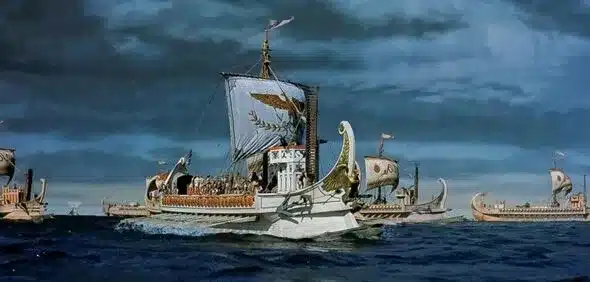
A Cinematic Triumph: ‘Ben-Hur’ Dominates 20th Century Film Rankings
In the annals of filmmaking, certain cinematic achievements transcend their era, becoming enduring benchmarks of artistic excellence. Among these, the 1959 epic “Ben-Hur” frequently emerges as a definitive masterpiece, often lauded as the paramount film of the 20th century. This colossal production not only shattered records by securing an unprecedented 11 Academy Awards but also cemented its status as one of the most commercially successful movies in history.
Critical reception remains overwhelmingly positive, with the film boasting an impressive 88% score from critics and a remarkable 90% score from audiences on Rotten Tomatoes. Many viewers and critics alike consider “Ben-Hur” to be not only the most defining cinematic work of its century but also one of the greatest films ever produced.
From Novel to Screen: The Making of an Epic
Directed by William Wyler, “Ben-Hur” is a grand adaptation of Lew Wallace’s 1880 novel, “Ben-Hur: A Tale of the Christ.” This cinematic retelling served as a remake of the 1925 silent film, bringing the story of Judah Ben-Hur, a Jewish prince whose life is irrevocably altered by the Roman occupation of Judea, to a new generation. The narrative delves into profound themes of personal drama, the complexities of friendship, the sting of betrayal, and the ultimate triumph of redemption, all set against the backdrop of one of history’s most captivating periods.
An Unprecedented Scale of Production
Upon its release, “Ben-Hur” was one of the most ambitious and costly films ever undertaken, with a staggering production budget exceeding $15 million. The sheer scale of the production was immense. Filming involved the use of over 200 camels, 2,500 horses, and approximately 10,000 extras. Elaborate, monumental sets were meticulously constructed in Italy, creating an immersive and historically rich environment.
A Legacy of Iconic Scenes and Awards
The film’s legendary chariot race is still widely celebrated as one of the most breathtaking and expertly crafted action sequences ever captured on film. Beyond its visual spectacle, “Ben-Hur” achieved monumental success at the box office, becoming the highest-grossing film of 1959. Its dominance continued at the Academy Awards, where it garnered 11 Oscars, including the prestigious awards for Best Picture, Best Director, and Best Actor for Charlton Heston’s commanding performance.
This record for Academy Award wins stood unparalleled for decades, later matched only by “Titanic” and “The Lord of the Rings: The Return of the King.” The enduring power of “Ben-Hur” is reflected in the effusive praise from those who have experienced it.
Audience Acclaim and Enduring Appreciation
Viewers consistently profound admiration for the film. Comments frequently highlight its “marvellous story, screenplay, locations and all the people that appear in the movie,” describing it as a “colossal work” that thoroughly deserved its accolades. Many consider it “possibly the best movie of all time and definitely the best film of the 20th century,” marveling at its “incredible story” and “awesome” special effects, especially given its production era.
Further praise describes “Ben-Hur” as a “masterpiece,” an “incredibly intimate human drama set against one of history’s greatest moments,” and “astounding.” The film’s cinematography and lighting are frequently lauded as “incredible,” contributing to its powerful emotional impact, with Charlton Heston’s performance often singled out for its striking presence and acting prowess.
